

Euclase on Matrix from the Chivor District, Colombia
No VAT is shown in accordance with Section 19 (1) of the German VAT Act. Shipping costs apply.
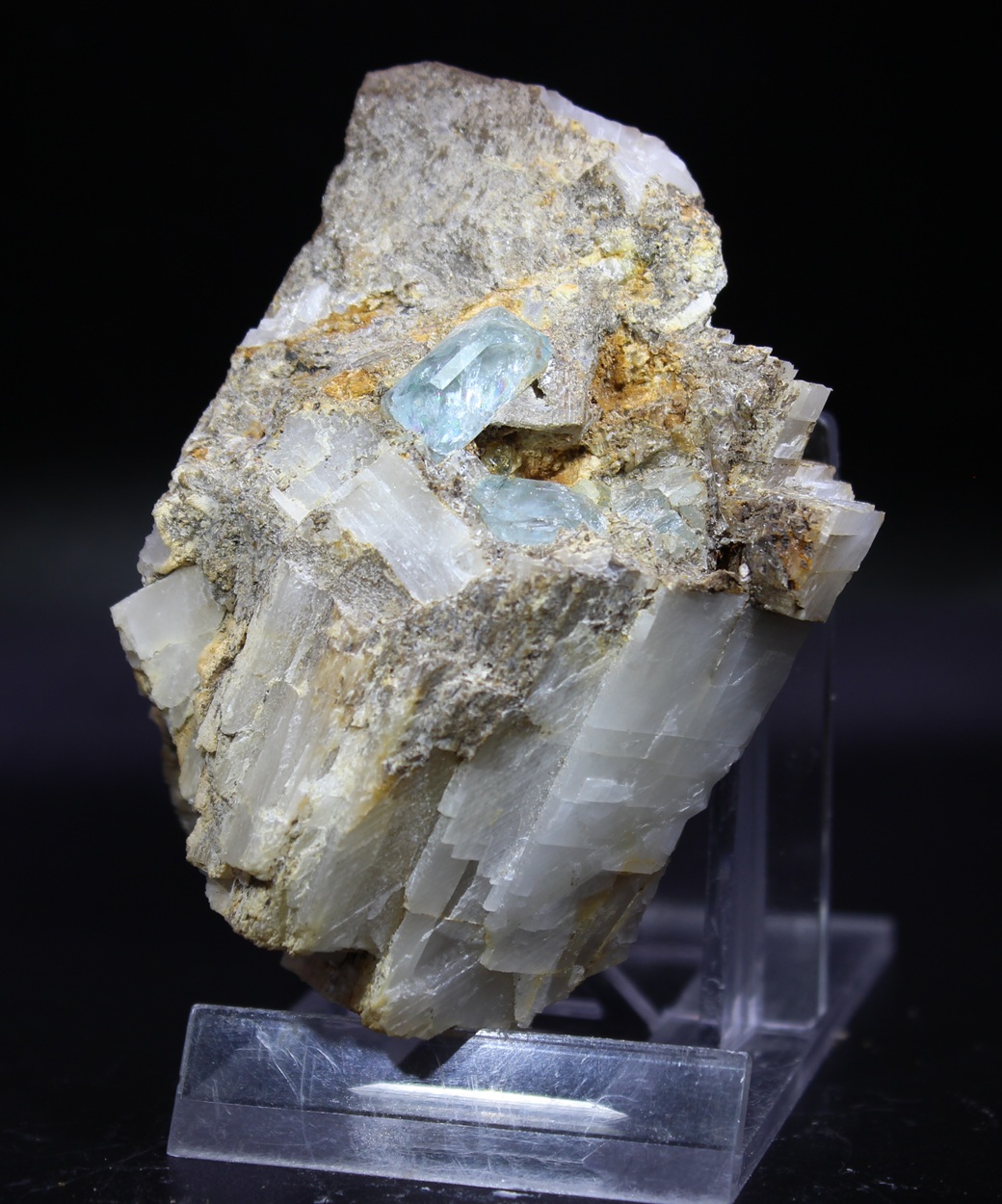
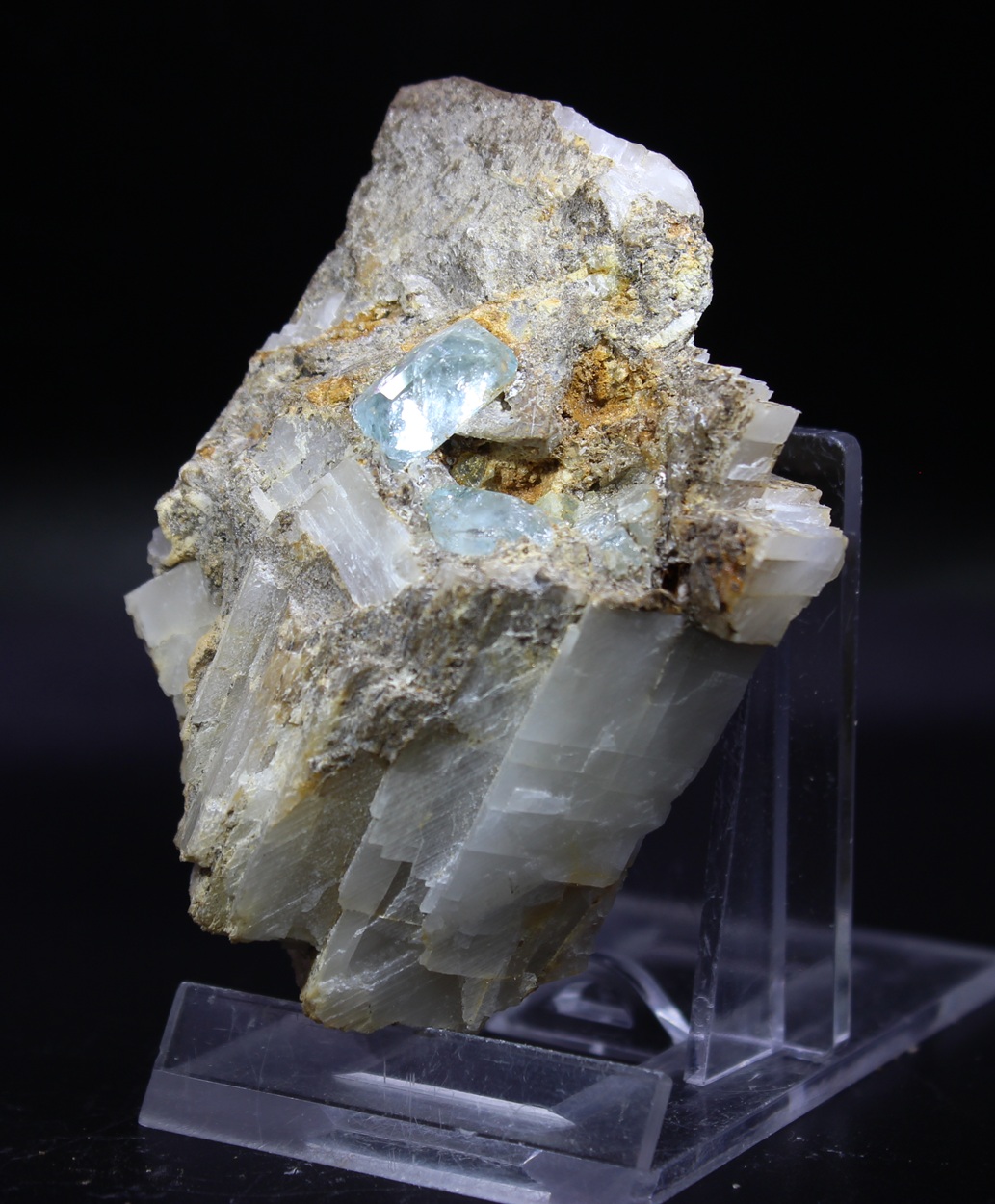
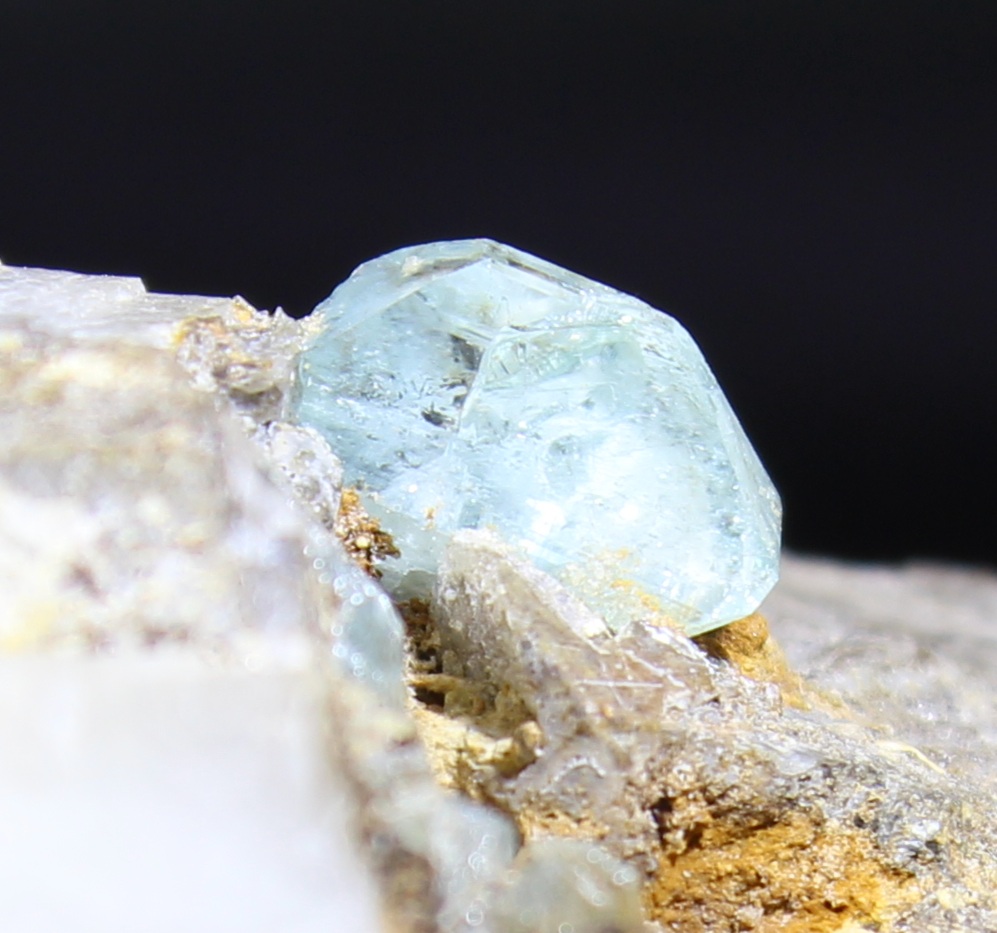
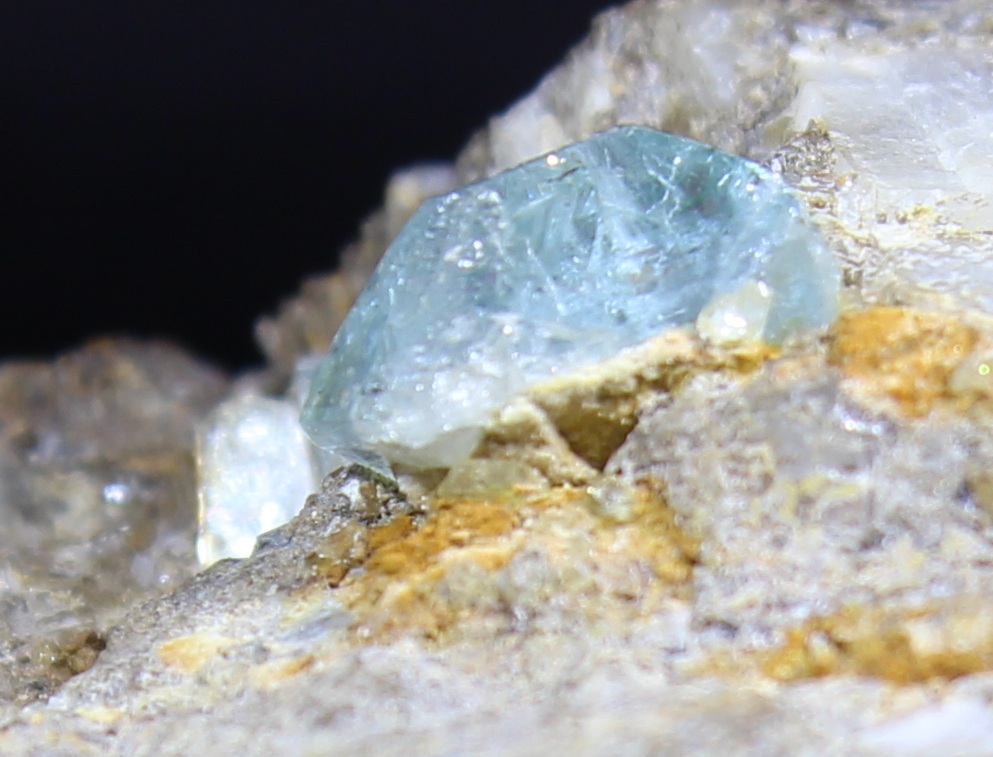
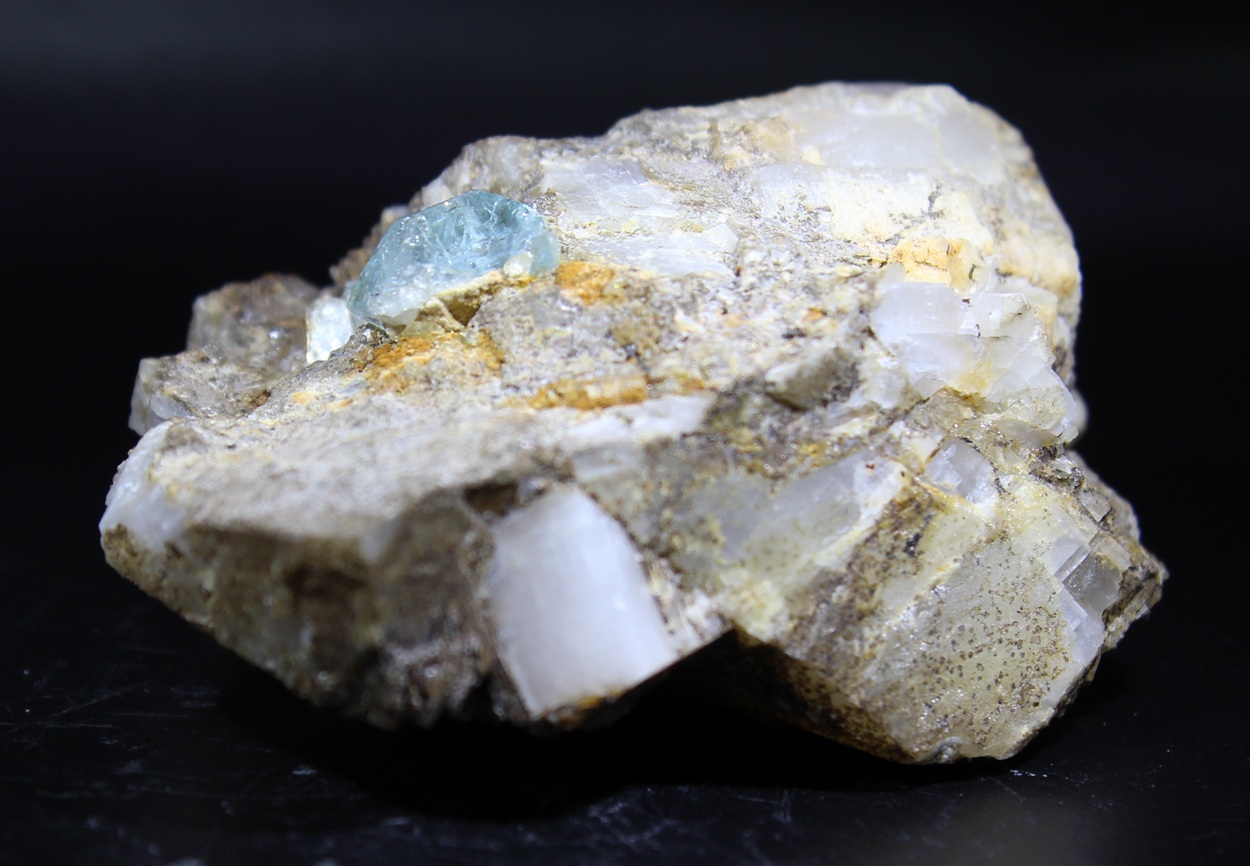
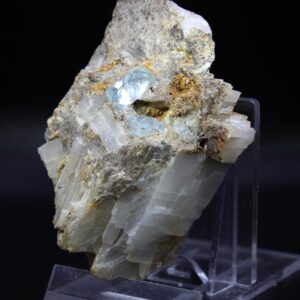
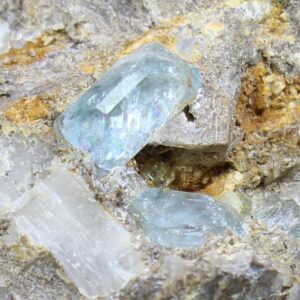
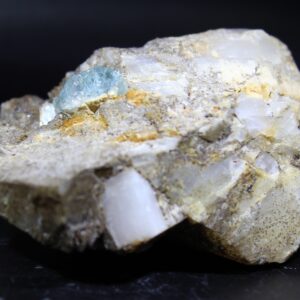
This exceptional euclase specimen comes from the Chivor District in the department of Boyacá, Colombia. Several pale blue euclase crystals sit on a light-colored, calcite-rich matrix, two of which are particularly well visible and largely preserved.
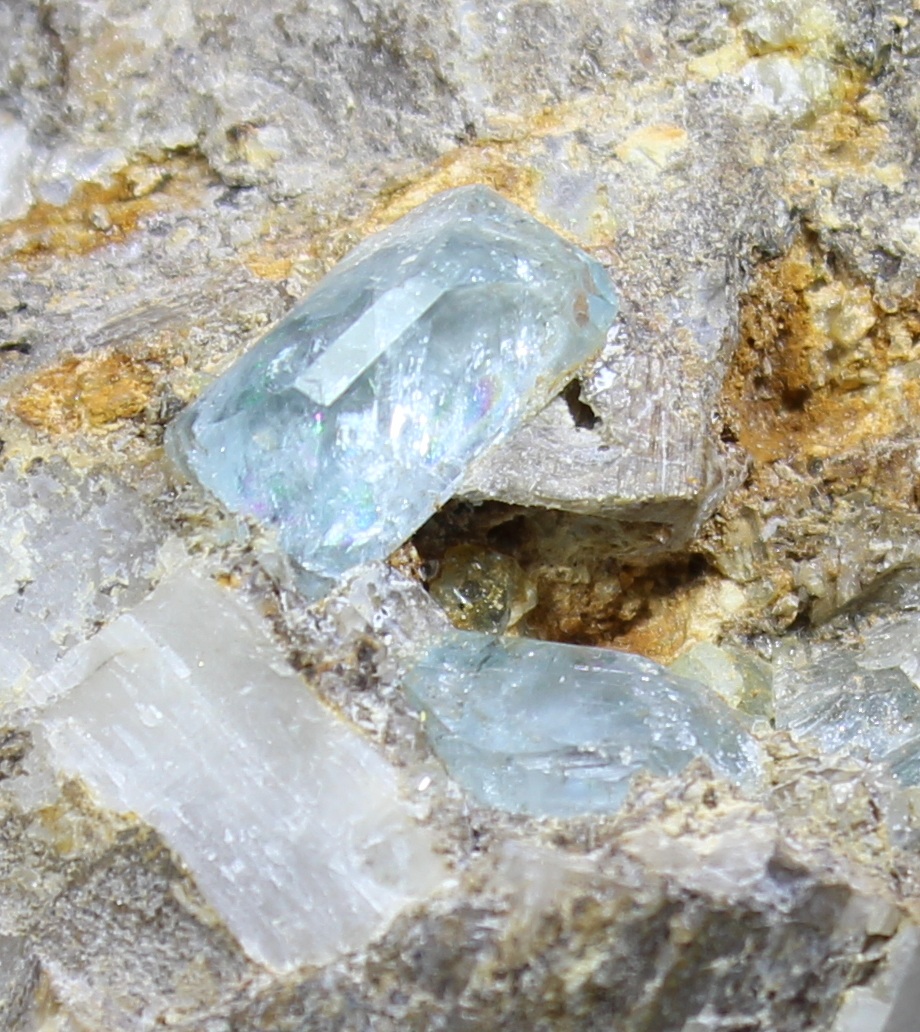
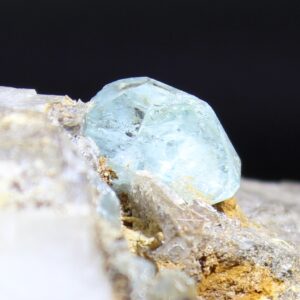
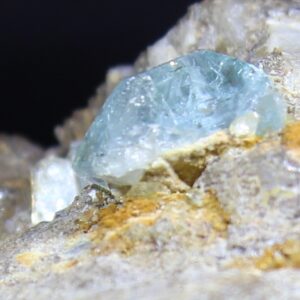
The largest crystal measures approximately 1.2 × 0.5 × 0.5 cm. It displays an attractive pale blue color, good transparency, and strong luster. Its clearly recognizable crystal form and exposed position make it the visual focal point of the specimen. A second, also clearly visible euclase crystal is only slightly damaged and adds to the specimen’s significance as a rare multiple-crystal matrix piece. A third crystal is more strongly damaged but additionally documents the natural euclase mineralization within the matrix.
Measuring 7.0 × 5.0 × 3.0 cm and weighing 118.1 g, the specimen belongs to the small cabinet size category.
Rare Euclase Crystals on Natural Matrix
Euclase is a comparatively rare beryllium aluminum silicate. Clearly recognizable crystals preserved in their original position on matrix are particularly uncommon. Loose single crystals occur on the market considerably more often than aesthetic matrix specimens.
This specimen displays two pale blue, transparent to translucent crystals in close spatial association. The nearly undamaged main crystal stands out clearly from the light-colored matrix. Its strong surface luster produces intense reflections depending on the viewing angle and clearly reveals the crystal faces.
The matrix consists predominantly of light-colored, coarsely developed crystals and gray-brown host-rock areas. Calcite is clearly recognizable as an associated mineral. Other components of the matrix have not been identified in greater detail.
Why This Specimen Is Presented in the Showroom
This specimen combines several features of particular interest to collectors: two clearly visible euclase crystals, an attractive pale blue color, good transparency, and preservation on natural matrix.
Particularly notable is the combination of a nearly undamaged main crystal and a second crystal that is also largely preserved. Such multiple-crystal specimens are considerably less common than loose euclase crystals or matrix pieces containing only fragmentary crystals.
The different views document both the overall aesthetics of the specimen and the crystal form, transparency, and natural setting of the euclase crystals. The clear color contrast between the pale blue crystals, white calcite, and gray-brown matrix areas gives the specimen a distinctive appearance.
Euclase from the Chivor District
The Chivor District lies within Colombia’s eastern emerald belt and is best known for its emerald mineralization. In addition to emerald, several rare associated minerals occur there, including euclase.
Euclase forms in mineralized fractures and hydrothermally altered rock zones. Matrix specimens document the natural position of the crystals within this mineralogical setting and therefore possess particular reference value.
The combination of a rare mineral species, good crystal preservation, multiple-crystal arrangement, and documented provenance makes this specimen a particularly attractive Colombian collector’s piece.
Video of the Euclase Specimen
| Feature | Details |
|---|---|
| Main Mineral | Euclase |
| Chemical composition | BeAlSiO₄(OH) |
| Associated Mineral | Calcite |
| Locality | Chivor District, Boyacá, Colombia |
| Dimensions | 7.0 × 5.0 × 3.0 cm |
| Weight | 118.1 g |
| Specimen Size | Small Cabinet Specimen |
| Size of the main crystal | Approximately 1.2 × 0.5 × 0.5 cm |
| Color | Skye blue |
| Transparency | Transparent to translucent |
| Crystal arrangement | Several euclase crystals on a calcite-rich matrix |
| Crystal preservation | Main crystal nearly undamaged; second crystal slightly damaged; another crystal preserved only fragmentarily |
| Matrix | Light-colored calcite with gray-brown host-rock areas |
| Special Feature | Rare multiple-crystal specimen with two largely preserved euclase crystals |
| Provenance | Personally acquired in Colombia |
If you are seriously interested in this specimen, I would be very pleased to receive a personal message.
| Mineral | Calcite, Euclase |
|---|---|
| Color | Blue |
| Size | Small cabinet specimen (5-7 cm) |
| Continent | South America |
| Country | Colombia |
| Feature | Classic locality |
Reviews
There are no reviews yet.