


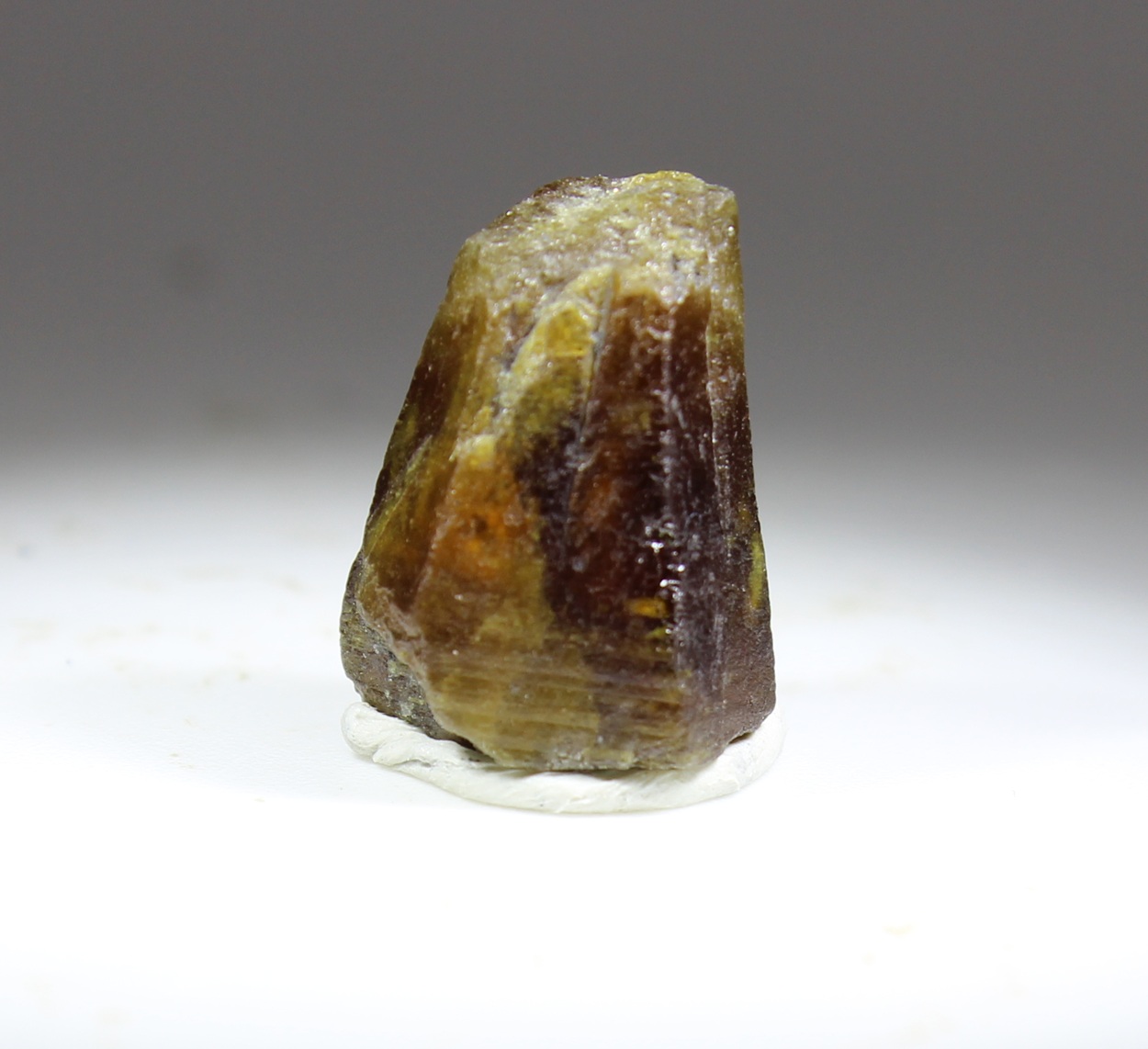
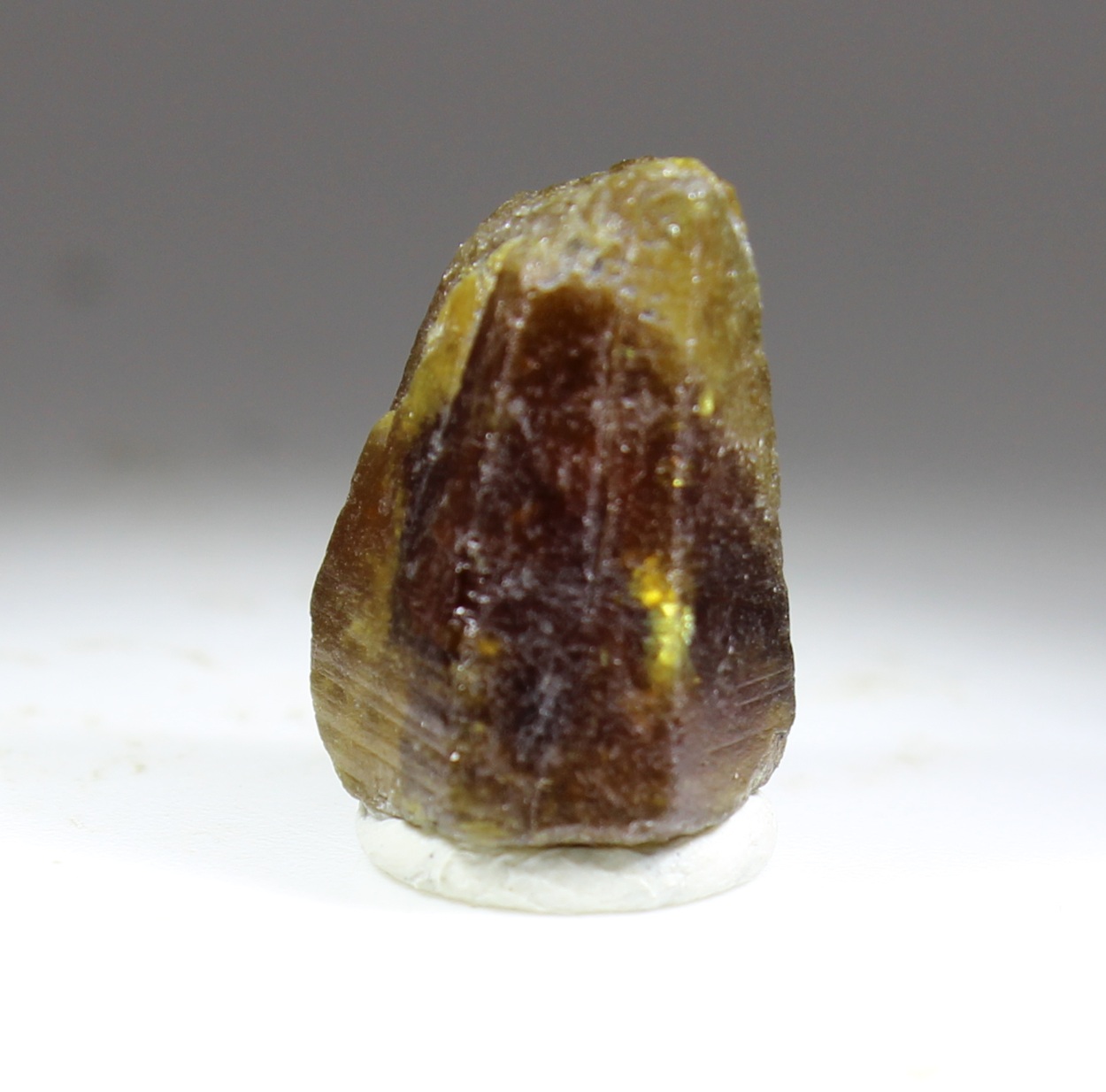
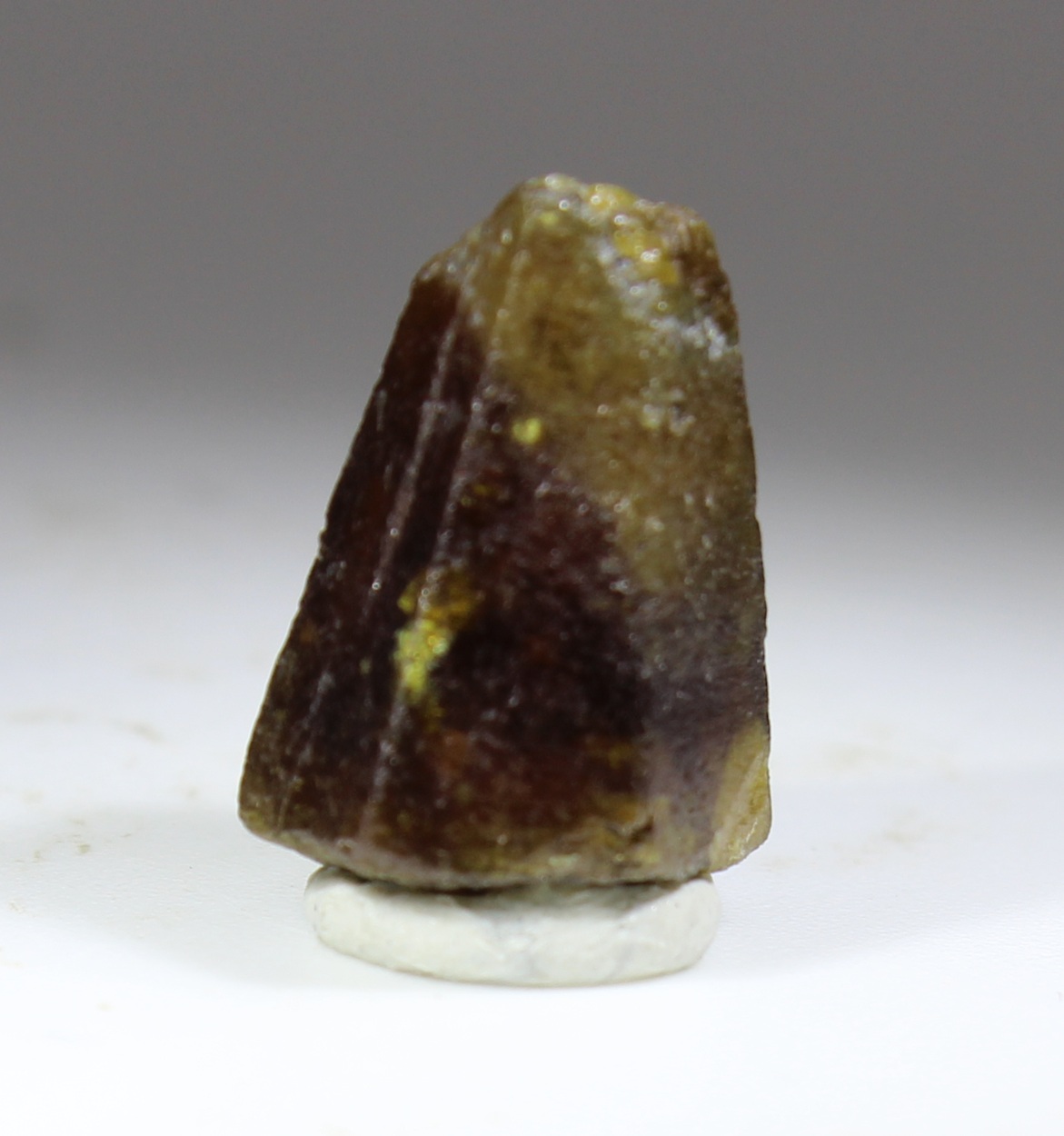
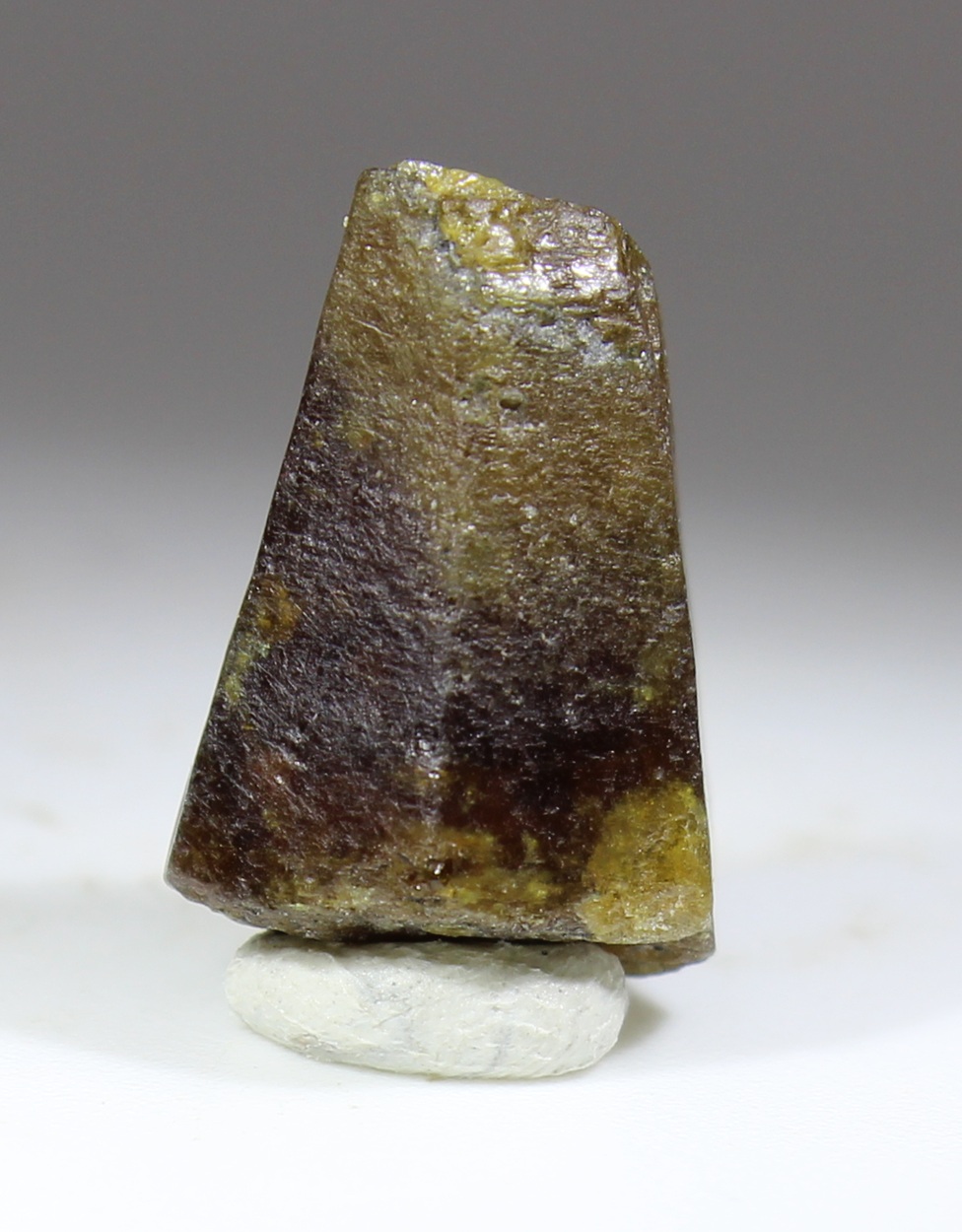
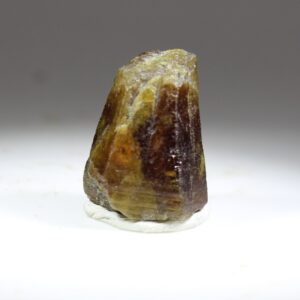
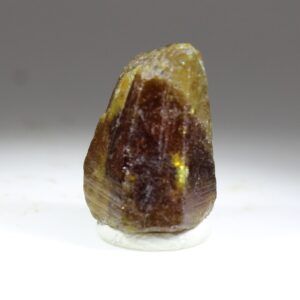
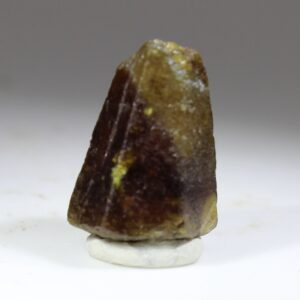
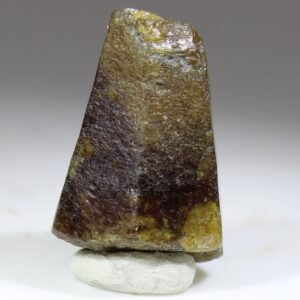
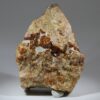

This individual parisite-(Ce) crystal comes from Muzo in the Department of Boyacá, Colombia. The historic emerald district is also the type locality of the mineral parisite-(Ce).
The 1.4 cm crystal displays a stout prismatic form and natural color zoning in yellowish, honey-colored, and reddish-brown tones. Its crystal faces have a vitreous to resinous luster. The crystal is opaque, but the different color zones remain clearly visible on its surface.
Parisite-(Ce) from Muzo, Colombia
Muzo is located in Colombia’s western emerald belt and is primarily known for its emerald deposits. In addition to emerald, various associated minerals occur there, including calcite, pyrite, and parisite-(Ce).
Parisite was scientifically described in 1845 based on material from Muzo. The mineral was named after José Ignacio París Ricaurte, who was associated with mining activities in Muzo during the 19th century. As the type locality and a classic mineral locality, Muzo therefore holds particular historical significance in mineralogy.
The crystal weighs 3.3 g and displays striking zoning from honey yellow to reddish brown. As a loose single crystal, it provides a clear view of the prismatic form, crystal faces, and color zoning visible on its surface. The specimen is particularly interesting for collectors of parisite, rare-earth minerals, and type-locality material.
Learn more about Parisite-(Ce) from Muzo, its mineralogical characteristics, and the significance of the type locality in my detailed article.
| Feature | Description |
|---|---|
| Mineral | Parisite-(Ce) |
| Locality | Muzo, Boyacá, Colombia |
| Region | Muzo Emerald District |
| Size | 1.4 cm |
| Weight | 3.3 g |
| Size Category | Micromount |
| Crystal Form | Stout prismatic single crystal |
| Color | Yellowish and honey-colored to reddish brown |
| Color Distribution | Naturally zoned |
| Luster | Vitreous to resinous |
| Transparency | Opaque |
| Morphology | Loose parisite-(Ce) single crystal with visible crystal faces |
| Parisite-(Ce) from the type locality of Muzo | Special Feature |
| Mineral | Parisite-(Ce) |
|---|---|
| Color | Brown |
| Size | Micromount (less than 1.5 cm) |
| Continent | South America |
| Country | Colombia |
| Feature | Acquired On Site, Classic locality, Type locality |
Be the first to review “Parisite-(Ce) Crystal from Muzo, Boyacá, Colombia – Type Locality”
Related products
No VAT is shown in accordance with Section 19 (1) of the German VAT Act. Shipping costs apply.
plus shipping costs
No VAT is shown in accordance with Section 19 (1) of the German VAT Act. Shipping costs apply.
plus shipping costs
No VAT is shown in accordance with Section 19 (1) of the German VAT Act. Shipping costs apply.
plus shipping costs
No VAT is shown in accordance with Section 19 (1) of the German VAT Act. Shipping costs apply.
plus shipping costs
No VAT is shown in accordance with Section 19 (1) of the German VAT Act. Shipping costs apply.
plus shipping costs
Colombia
No VAT is shown in accordance with Section 19 (1) of the German VAT Act. Shipping costs apply.
plus shipping costs
No VAT is shown in accordance with Section 19 (1) of the German VAT Act. Shipping costs apply.
plus shipping costs
No VAT is shown in accordance with Section 19 (1) of the German VAT Act. Shipping costs apply.
plus shipping costs
Reviews
There are no reviews yet.