




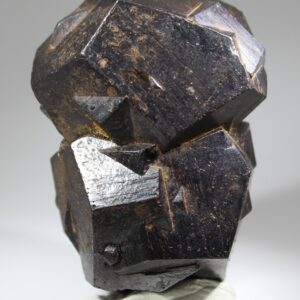
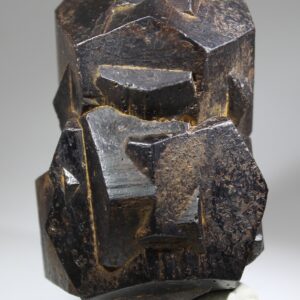


Double Iron Cross Twin after Pyrite from Ubalá, Colombia
No VAT is shown in accordance with Section 19 (1) of the German VAT Act. Shipping costs apply.
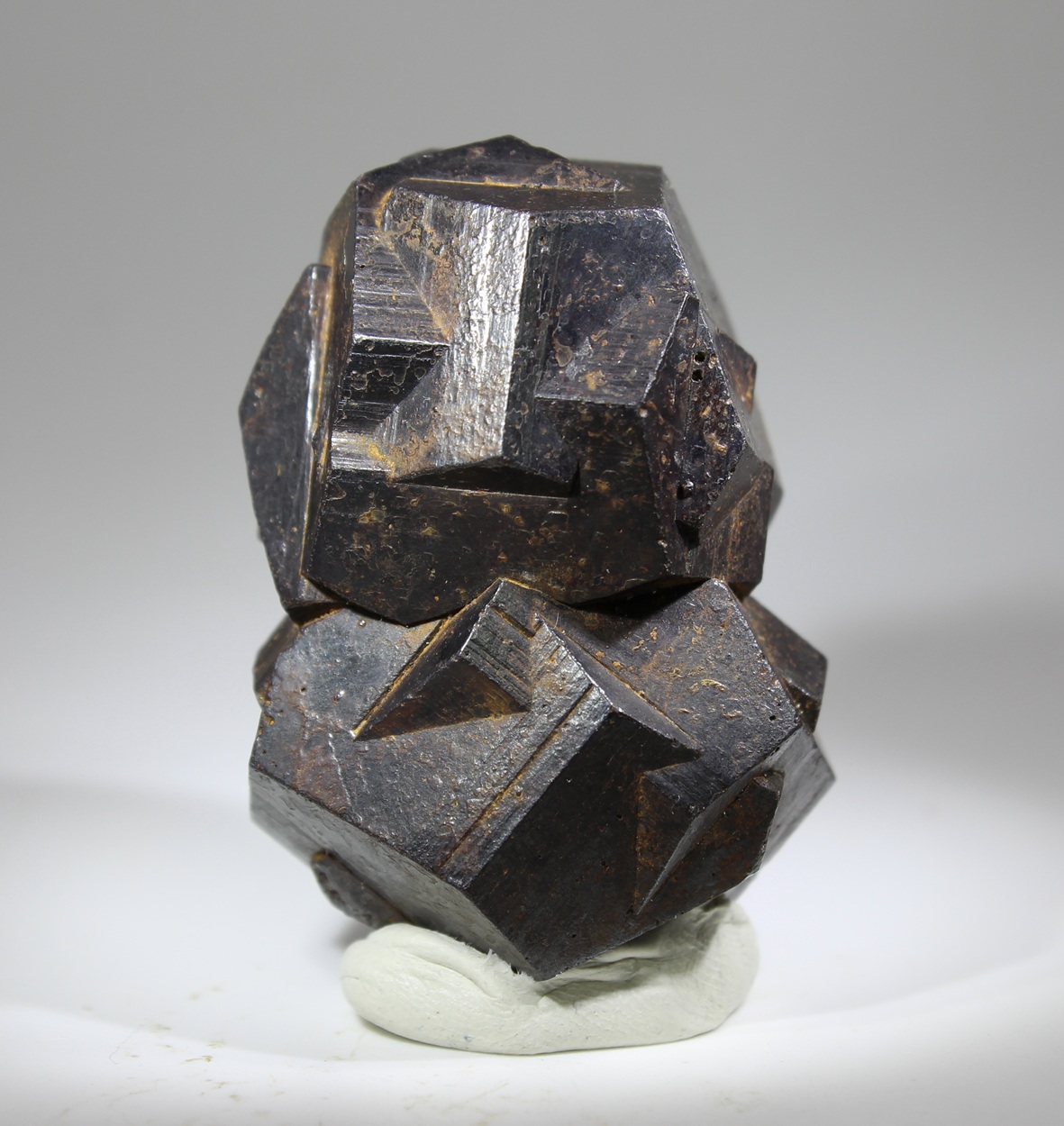
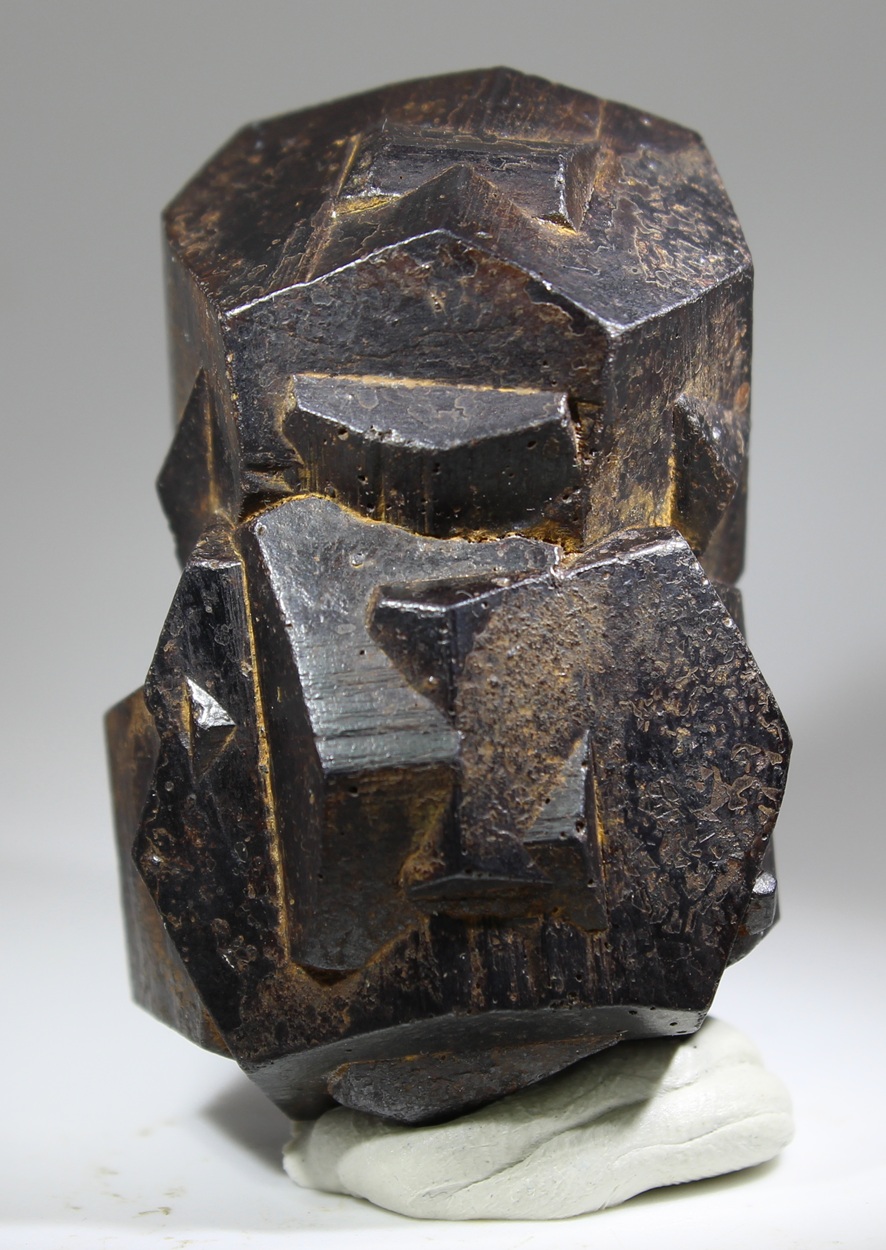
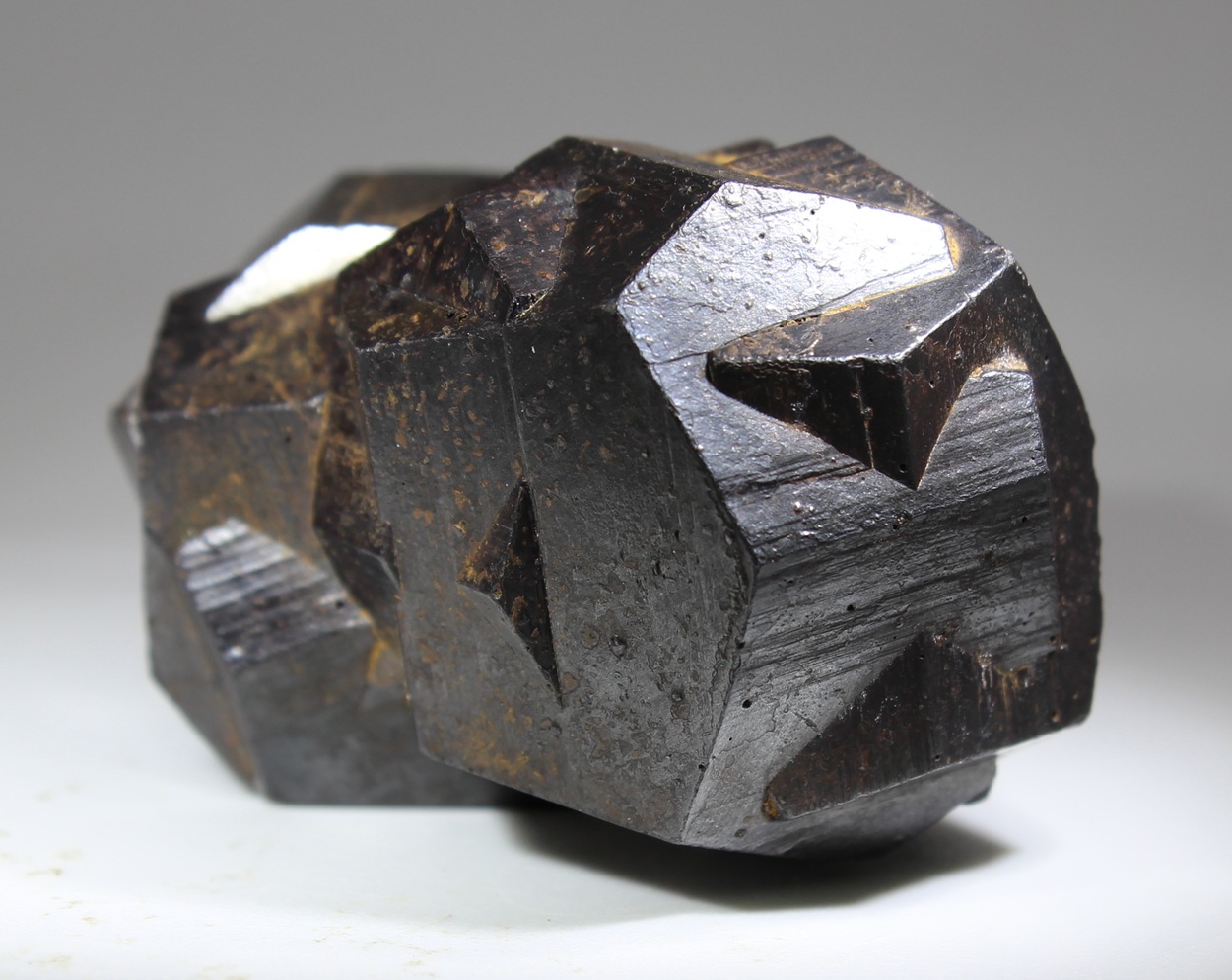
This specimen comes from Ubalá in the department of Cundinamarca, Colombia, and displays an unusual intergrowth of two Iron Cross twins originally formed as pyrite. Measuring 5.0 × 3.5 × 3.0 cm and weighing 117.5 g, the piece belongs to the small cabinet specimen size category.
The original pyrite crystal morphology remains clearly visible on the exterior. However, the brown, iron-oxide-rich surface indicates varying degrees of alteration or coating by goethite and other iron compounds commonly grouped under the collective term “limonite.” Without mineralogical analysis, it is impossible to determine whether substantial portions of the original pyrite remain inside the specimen.
An Exceptional Example of Crystallographic Intergrowth
Iron Cross twins are among the best-known twinning forms of pyrite. They form when two pyritohedra penetrate one another in a specific crystallographic orientation, producing the characteristic cross-like symmetry. Large, well-developed Iron Cross twins are considerably less common than small or only partially formed examples.
This specimen goes beyond a single Iron Cross twin. It displays two intergrown Iron Cross twins, creating a double twin with particularly complex morphology. Despite the iron-oxide alteration, the individual crystal bodies and their mutual penetration remain clearly recognizable.
Why This Specimen Is Presented in the Showroom
This specimen combines unusual crystal morphology with a mineralogically interesting alteration history. The intergrowth of two Iron Cross twins is considerably less common than a single Iron Cross and makes the piece a distinctive example of crystallographic twinning.
The external crystal form has remained recognizable despite alteration of the near-surface mineral composition. The specimen therefore documents both the original twinning of pyrite and the subsequent effects of oxidation and weathering.
The external appearance alone does not reveal whether the specimen represents an extensive pseudomorph after pyrite or a goethite-rich coating surrounding a still largely pyritic core. Colombian Iron Cross twins range from pyrite crystals with thin goethite coatings to specimens showing much more advanced alteration.
The combination of a double twin, preserved crystal morphology, and an uncertain degree of alteration makes the specimen particularly interesting for specialized mineral collections and as a reference piece illustrating crystal morphology and mineral alteration.
Iron Cross Twins from Ubalá
Ubalá lies in the department of Cundinamarca within Colombia’s Eastern Cordillera. The region is known as a source of large Iron Cross twins of pyrite, although specimens from the area have sometimes also been attributed to nearby Gachalá. Both relatively fresh pyrite crystals with thin goethite coatings and more strongly oxidized specimens are known from the region.
The characteristic Iron Cross form results from the crystallographically controlled penetration of two pyritohedra. In this specimen, two such twins are themselves intergrown, producing a particularly complex crystal morphology that clearly distinguishes the piece from ordinary single twins.
The combination of a classic Colombian locality, double twinning, and visible iron-oxide alteration makes this specimen an exceptional reference piece from Ubalá.
Video of the Double Iron Cross Twin
| Feature | Details |
|---|---|
| Original mineral | Pyrite |
| Surface mineralization | Goethite and iron-oxide weathering products (“limonite”) |
| Chemical composition of pyrite | FeS2 |
| Locality | Ubalá, Department of Cundinamarca, Colombia |
| Dimensions | 5.0 × 3.5 × 3.0 cm |
| Weight | 117.5 g |
| Specimen size | Small cabinet specimen |
| Crystal morphology | Intergrowth of two Iron Cross twins |
| Twinning form | Iron Cross penetration twin composed of intergrown pyritohedra |
| Color | Brown |
| Alteration state | Iron-oxide alteration; the possible preservation of a pyrite core cannot be determined from the exterior |
| Special feature | Double Iron Cross twin with complex crystal morphology |
| Scientific significance | Reference specimen illustrating twinning, crystal morphology, and oxidative mineral alteration |
| Provenance | Personally acquired in Colombia |
| Mineral | Pyrite |
|---|---|
| Color | Brown |
| Size | Small cabinet specimen (5-7 cm) |
| Continent | South America |
| Country | Colombia |
| Feature | Acquired On Site, Twinning |
Reviews
There are no reviews yet.