An Exceptional Record of Emerald Formation
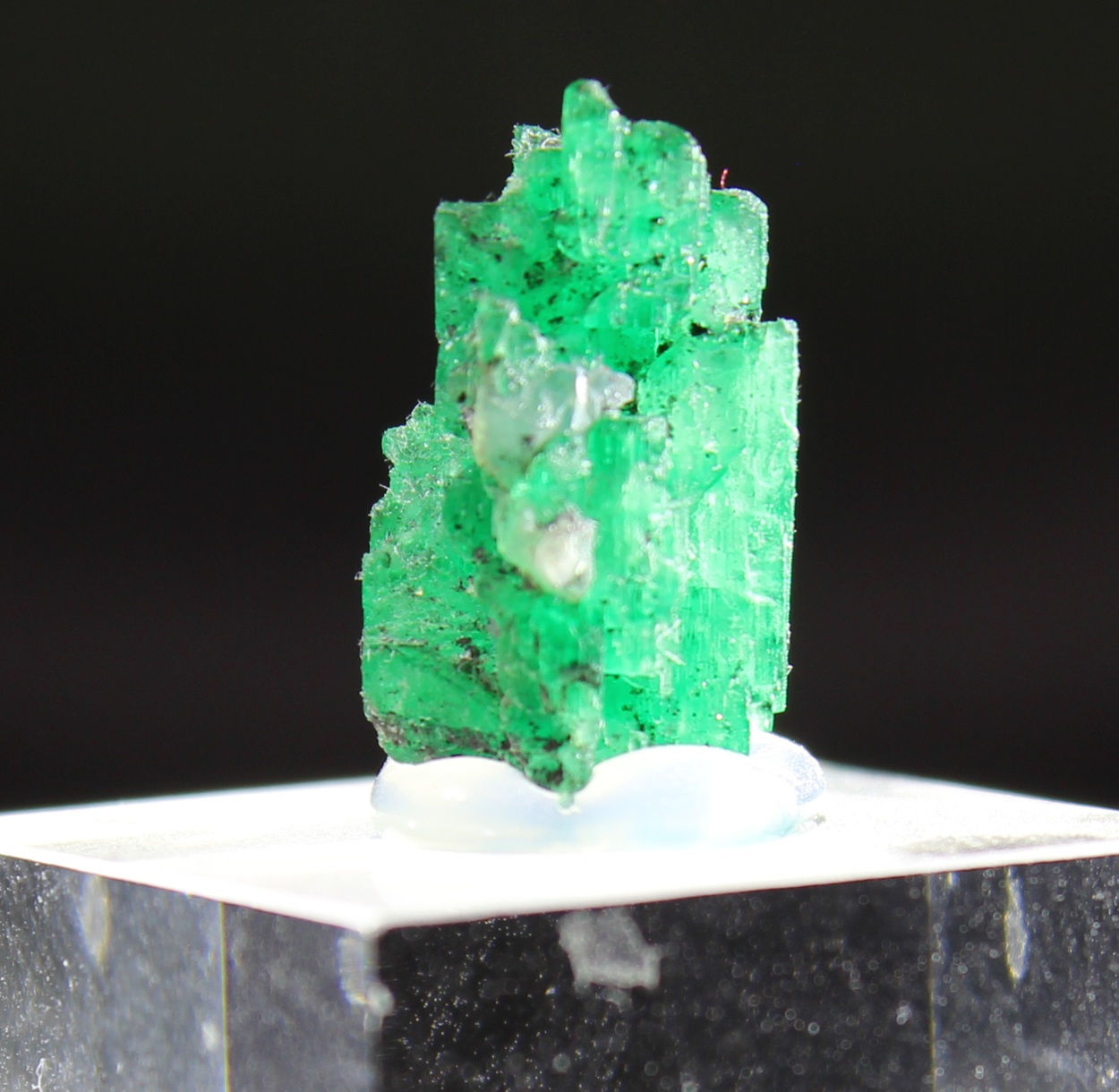
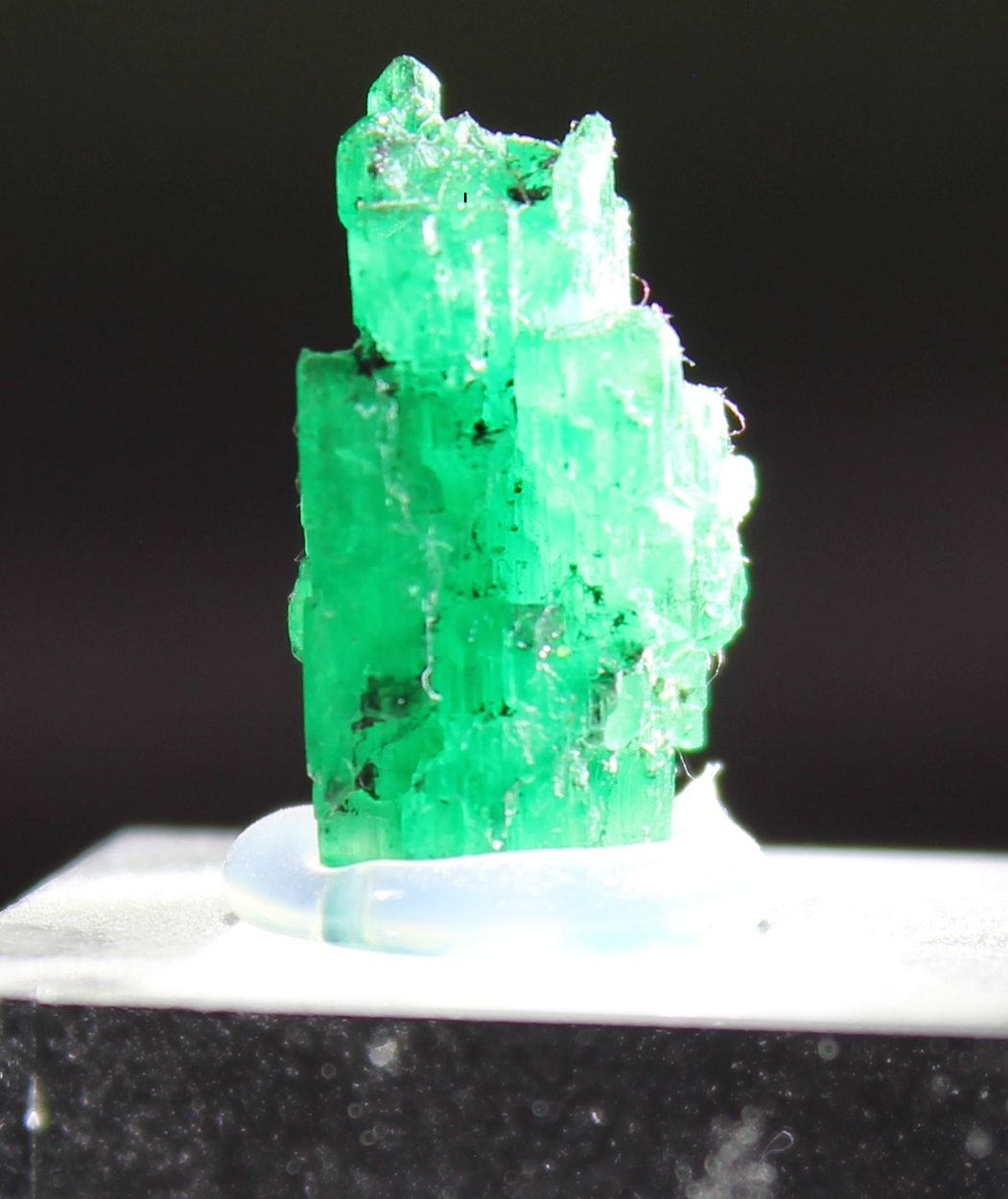
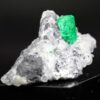
This specimen comes from the famous Muzo district in the Department of Boyacá, Colombia—one of the world’s best-known regions for high-quality emeralds. At its centre is an intensely green emerald crystal whose surface shows clear signs of later dissolution.
It is precisely this irregularly altered crystal surface that makes the specimen geologically so interesting. It suggests that, after its formation, the crystal came into contact once again with reactive hydrothermal fluids. In the process, the originally developed surface was chemically altered in places and partially dissolved.
The specimen therefore documents not only the formation of the crystal itself, but also a later stage in the hydrothermal evolution of the deposit.
Why This Specimen Is Presented in the Showroom
This specimen belongs in the showroom because it makes a geological process visible that is far less commonly recognizable directly on an emerald crystal.
Metasomatic processes play an important role in the formation of Colombian emerald deposits. Hydrothermal fluids alter the host rock, mobilize chemical elements, and thereby create the conditions necessary for emerald formation.
In this specimen, a later phase of hydrothermal alteration is also evident. The partially dissolved crystal surface shows that the evolution of the deposit did not necessarily end with the crystallization of the emerald. Later fluids were able to alter minerals that had already formed.
This contrast is precisely what makes the specimen so instructive: processes that contribute to the formation of a deposit can, during later stages of its evolution, also modify crystals that had already developed.
Locality
The Muzo district in Colombia’s western emerald belt is one of the most famous emerald-producing regions in the world. Emeralds there occur mainly in hydrothermal carbonate veins and breccias within dark, carbon-rich sedimentary rocks.
Their formation is closely linked to the circulation of hot, highly saline fluids and intense fluid–rock interaction. Under suitable physicochemical conditions, the elements required for emerald formation were mobilized and could ultimately crystallize as beryl.
| Feature | Description |
|---|---|
| Mineral | Emerald, variety of beryl |
| Locality | Muzo district, Boyacá, Colombia |
| Crystal color | Intense green |
| Crystal habit | Single, metasomatically etched crystal |
| Special Features | Clearly etched crystal surface with indications of later hydrothermal alteration |
| Geological significance | Documents the later alteration of an already formed emerald crystal |
| Scientific value | Instructive display specimen illustrating emerald genesis, metasomatism, and hydrothermal alteration |
| Collectibility | Unusual geological display specimen from one of the world’s most famous emerald regions |