


Parisite-(Ce) from Muzo, Colombia – Nearly Complete Single Crystal
No VAT is shown in accordance with Section 19 (1) of the German VAT Act. Shipping costs apply.
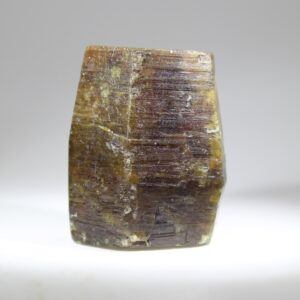
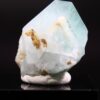
This specimen presents an unusually large, nearly complete single crystal of parisite-(Ce) from the Muzo area in Colombia’s western emerald belt. Measuring 3.0 × 2.4 × 2.1 cm and weighing 40.0 g, the crystal reaches a remarkable size for this rare mineral species.
An Exceptional Rare-Earth Mineral of Historical Significance
This specimen presents an unusually large, nearly complete single crystal of parisite-(Ce) from the Muzo area in Colombia’s western emerald belt. The region is of particular mineralogical significance for parisite-(Ce), as the mineral was first scientifically described from this area and Muzo is regarded as the type locality of the species.
Parisite-(Ce) is a rare calcium cerium fluorocarbonate and belongs to the group of rare-earth minerals. Well-developed single crystals are considerably less common than small crystals, fragments, or matrix-bound occurrences.
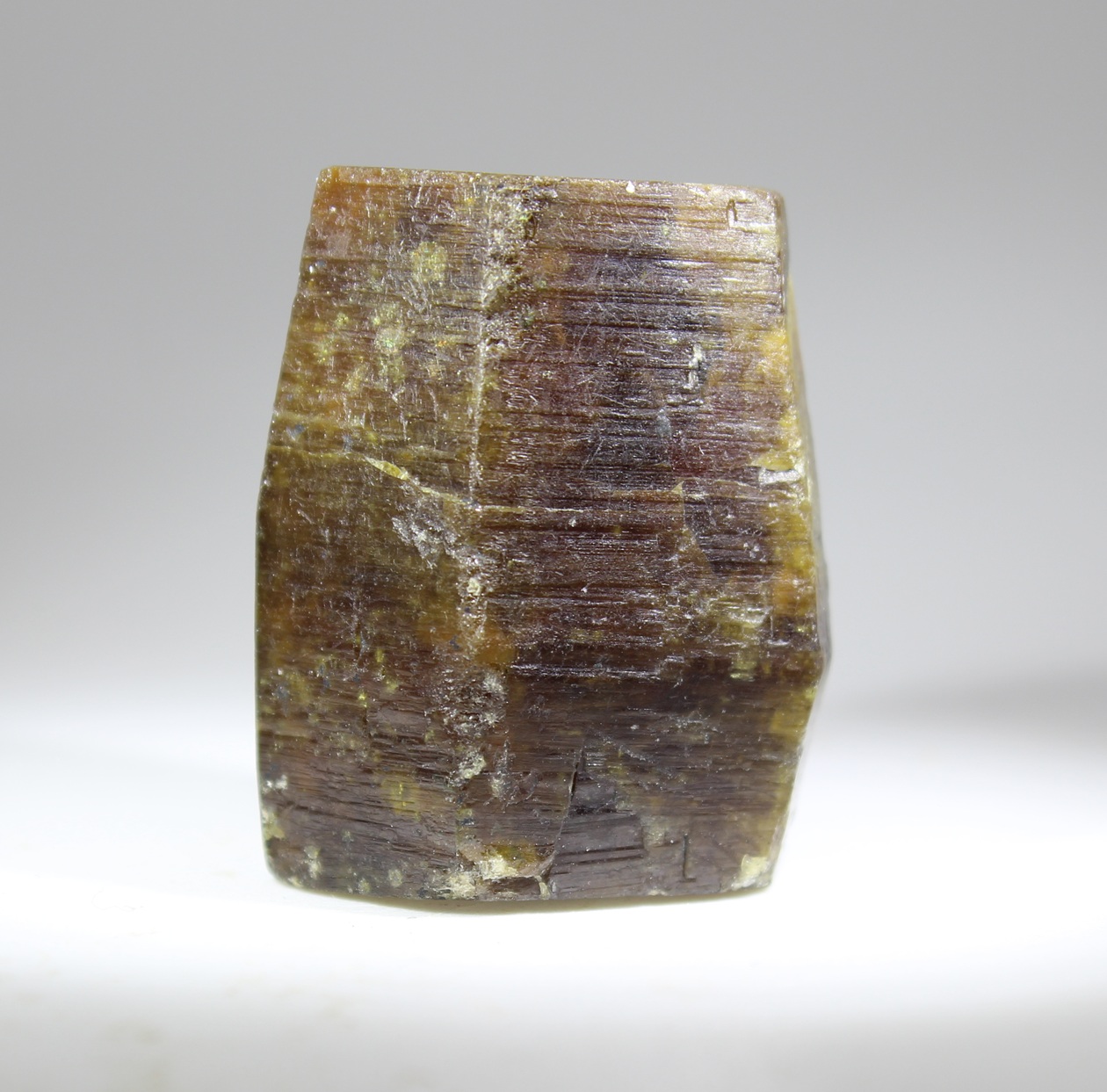
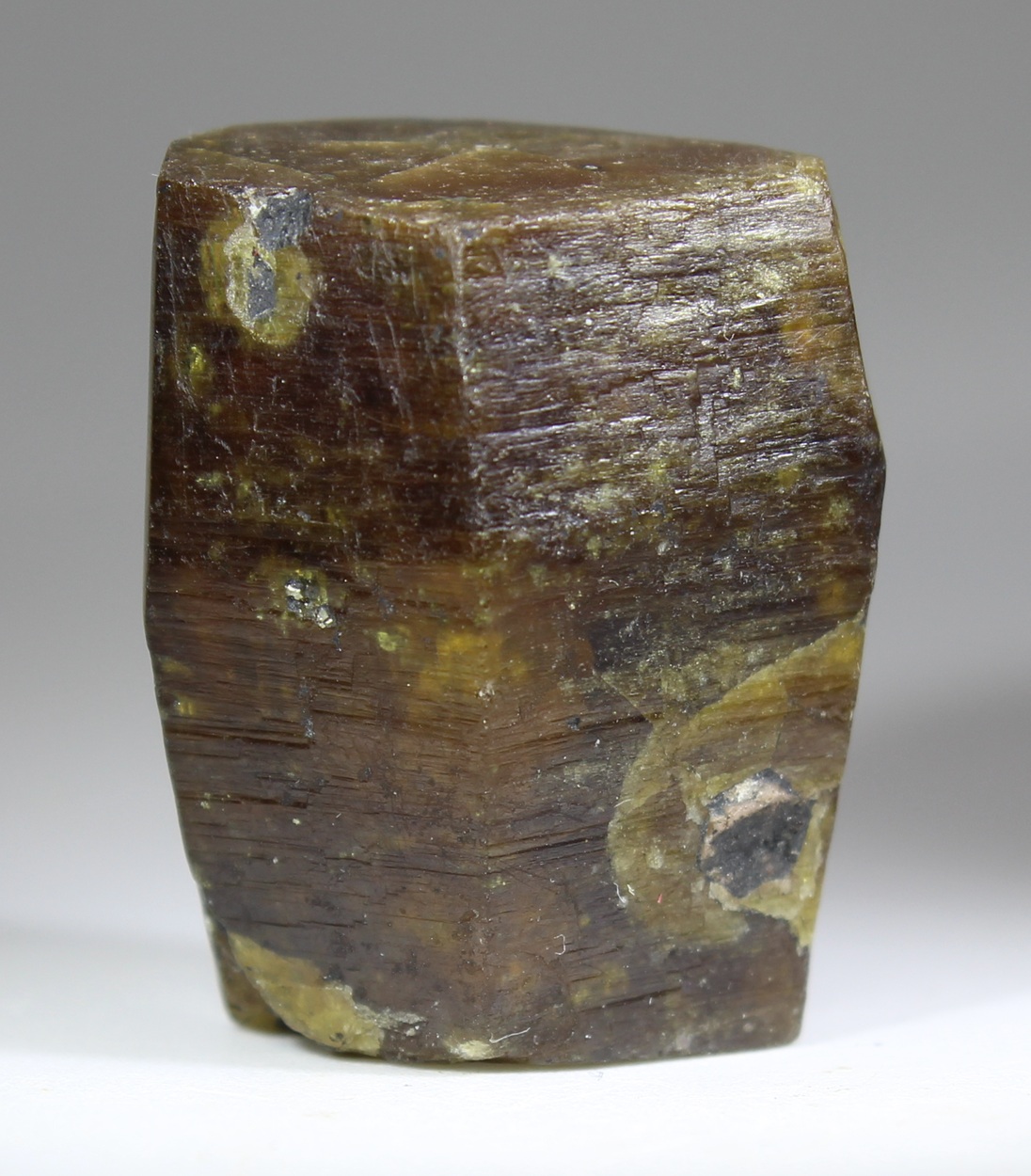
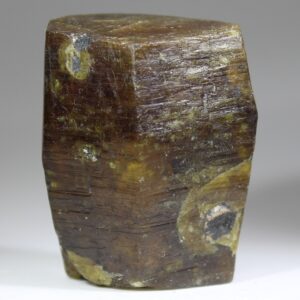
The specimen measures 3.0 × 2.4 × 2.1 cm and weighs 40.0 g. The matrix-free crystal displays a clearly recognizable, compact crystal form and pronounced longitudinal striations across its surfaces. Its size and largely preserved crystal body give the piece an exceptional presence.
Why This Specimen Is Presented in the Showroom
This piece combines several features of particular interest to collectors: its remarkable size for parisite-(Ce), its nearly complete crystal form, and its provenance from the type locality of Muzo.
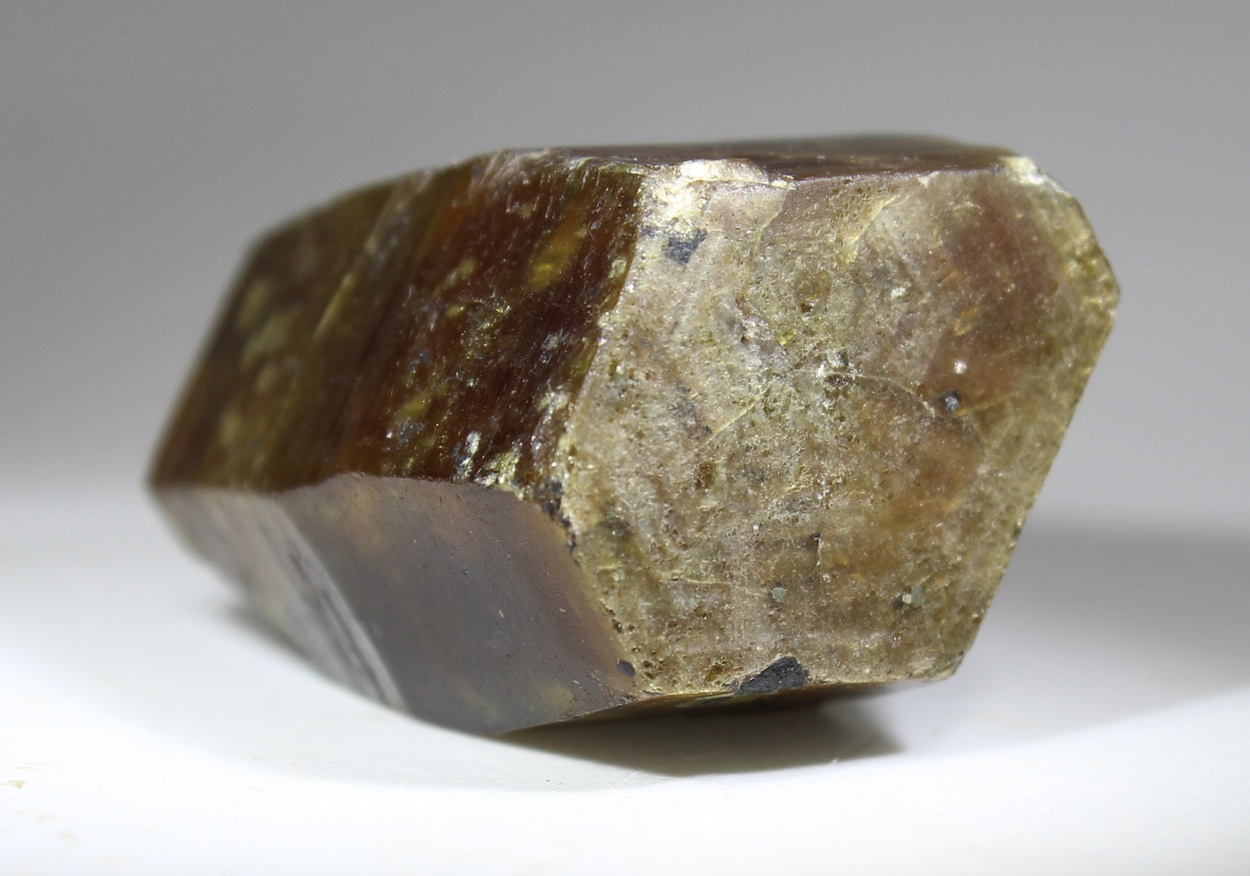
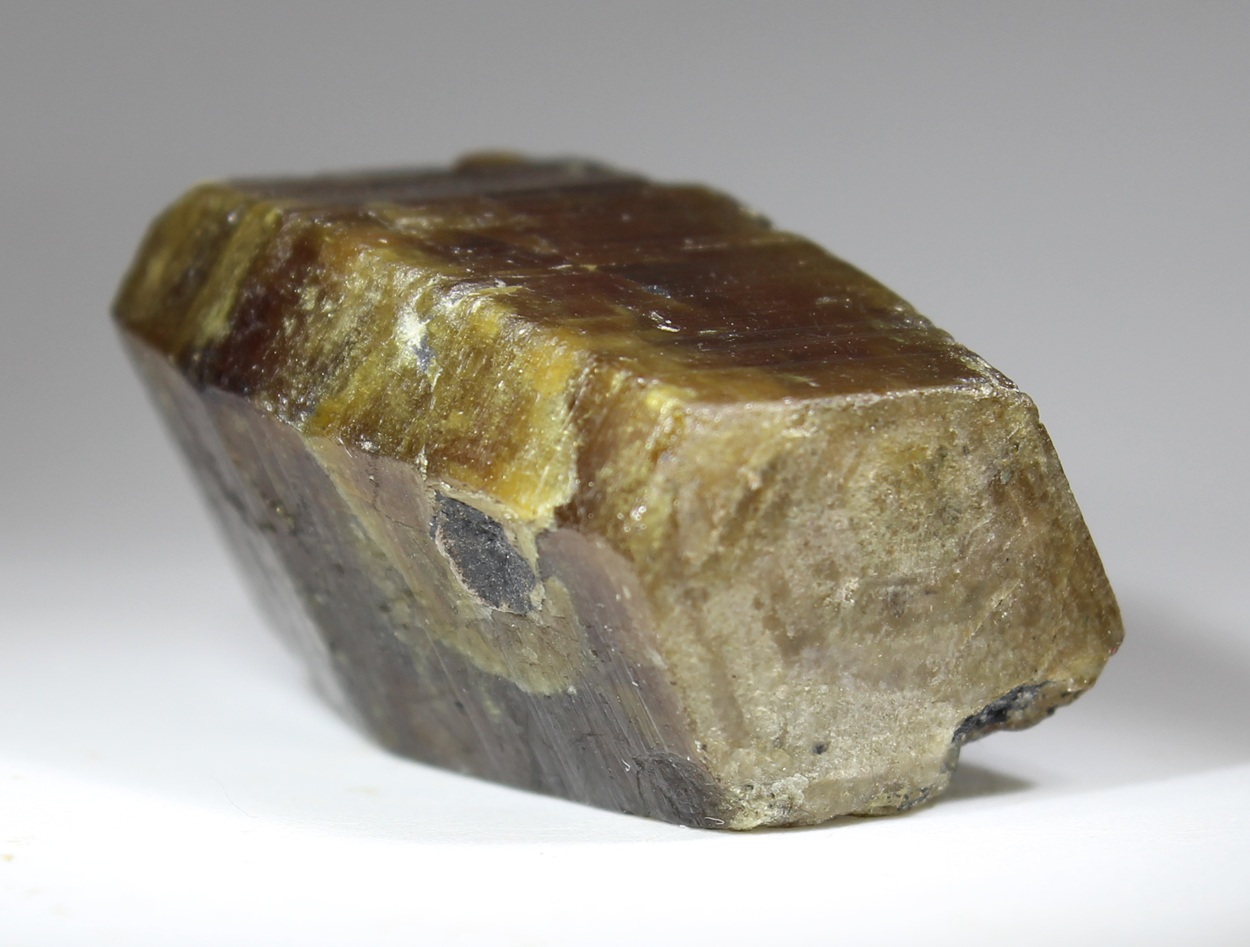
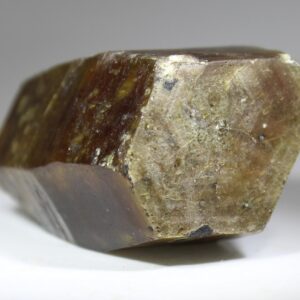
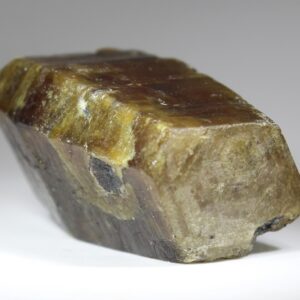
The different views show clearly developed side faces and a partially preserved upper termination. Natural contact and separation surfaces are visible at the base and along individual sides, indicating the crystal’s original attachment within the host rock. Minor irregularities and edge features are part of the specimen’s natural preservation and only slightly affect its clearly recognizable crystal form.
As a matrix-free single crystal, the piece allows its form, proportions, surface structure, and crystal striation to be examined directly. Nearly complete parisite-(Ce) crystals of this size from the Muzo area are extraordinarily rare.
Due to its size, preservation, and documented provenance, the specimen is particularly suitable for specialized mineral collections, systematic collections of rare-earth minerals, and collections focused on type localities and classic Colombian mineral regions.
Parisite-(Ce) from Muzo
The Muzo area in the department of Boyacá is one of Colombia’s best-known mineral-producing regions. In addition to its world-famous emeralds, numerous associated minerals occur there, including calcite, pyrite, apatite, and parisite-(Ce).
Parisite-(Ce) has a particularly important historical connection with Muzo. The mineral’s original scientific description from this region established the area as its type locality and made Muzo one of the most important classic localities for this rare mineral species.
The combination of unusual crystal size, largely complete preservation, distinct surface striation, classic locality, and personal provenance makes this specimen an important reference piece for parisite-(Ce) from Colombia.
| Feature | Description |
|---|---|
| Mineral | Parisite-(Ce) |
| Mineral class | Rare-earth fluorocarbonate |
| Chemical composition | CaCe₂(CO₃)₃F₂ |
| Locality | Muzo area, western emerald belt, Boyacá, Colombia |
| Dimensions | 3.0 × 2.4 × 2.1 cm |
| Weight | 40.0 g |
| Specimen Size | Miniature specimen |
| Crystal arrangement | Matrix-free single crystal |
| Crystal preservation | Nearly complete, with natural contact and separation surfaces |
| Surface Features | Pronounced longitudinal striation |
| Color | Brown |
| Special Feature | Exceptionally large parisite-(Ce) crystal from the type locality |
| Scientific Significance | Reference specimen of a rare rare-earth mineral species from its type locality |
| Provenance | Personally acquired in Colombia |
If you are seriously interested in this specimen, I would be very pleased to receive a personal message.
| Mineral | Parisite |
|---|---|
| Color | Brown |
| Size | Miniature specimen (3-5 cm) |
| Continent | South America |
| Country | Colombia |
| Feature | Acquired On Site, Classic locality, Type locality |
Reviews
There are no reviews yet.