

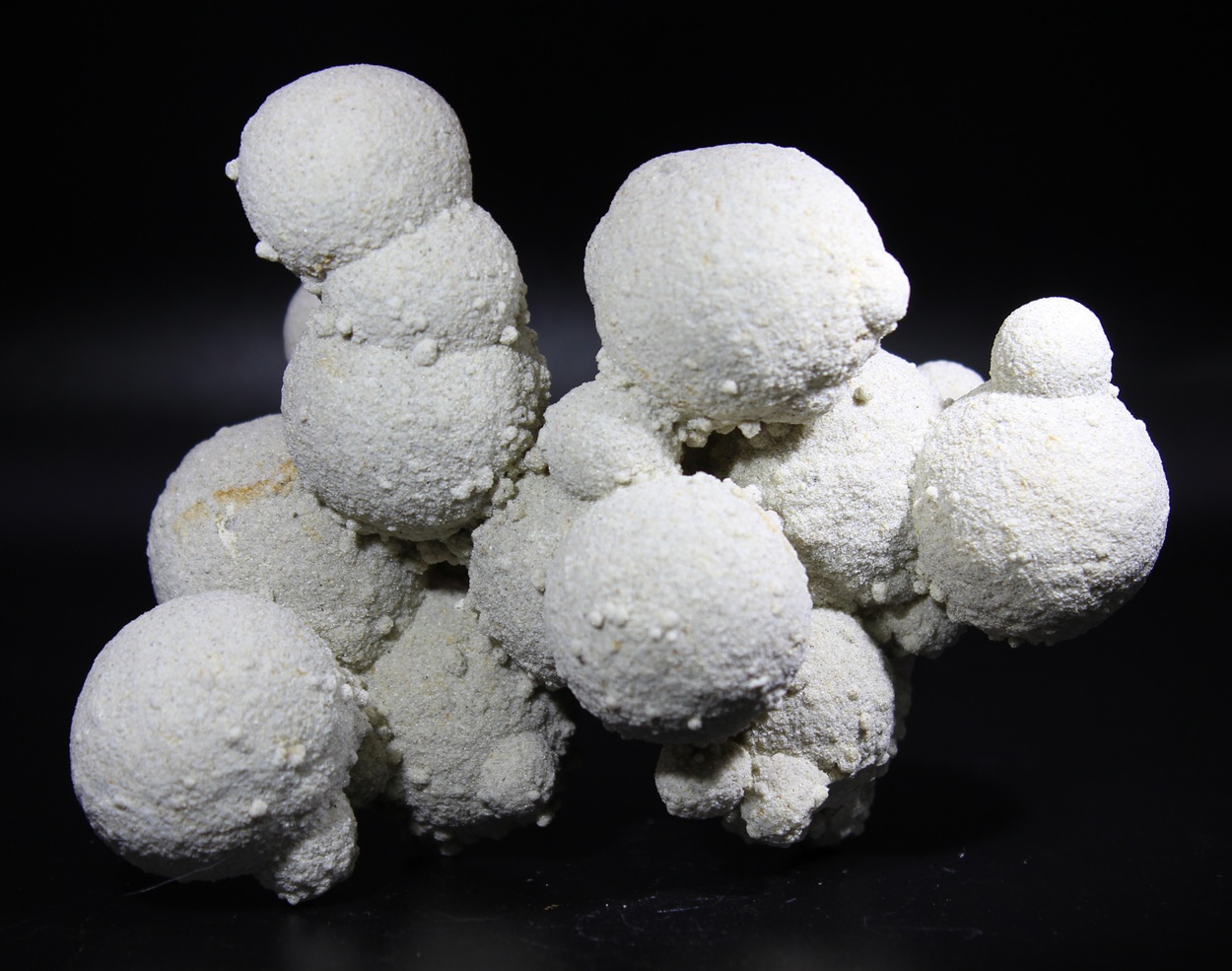
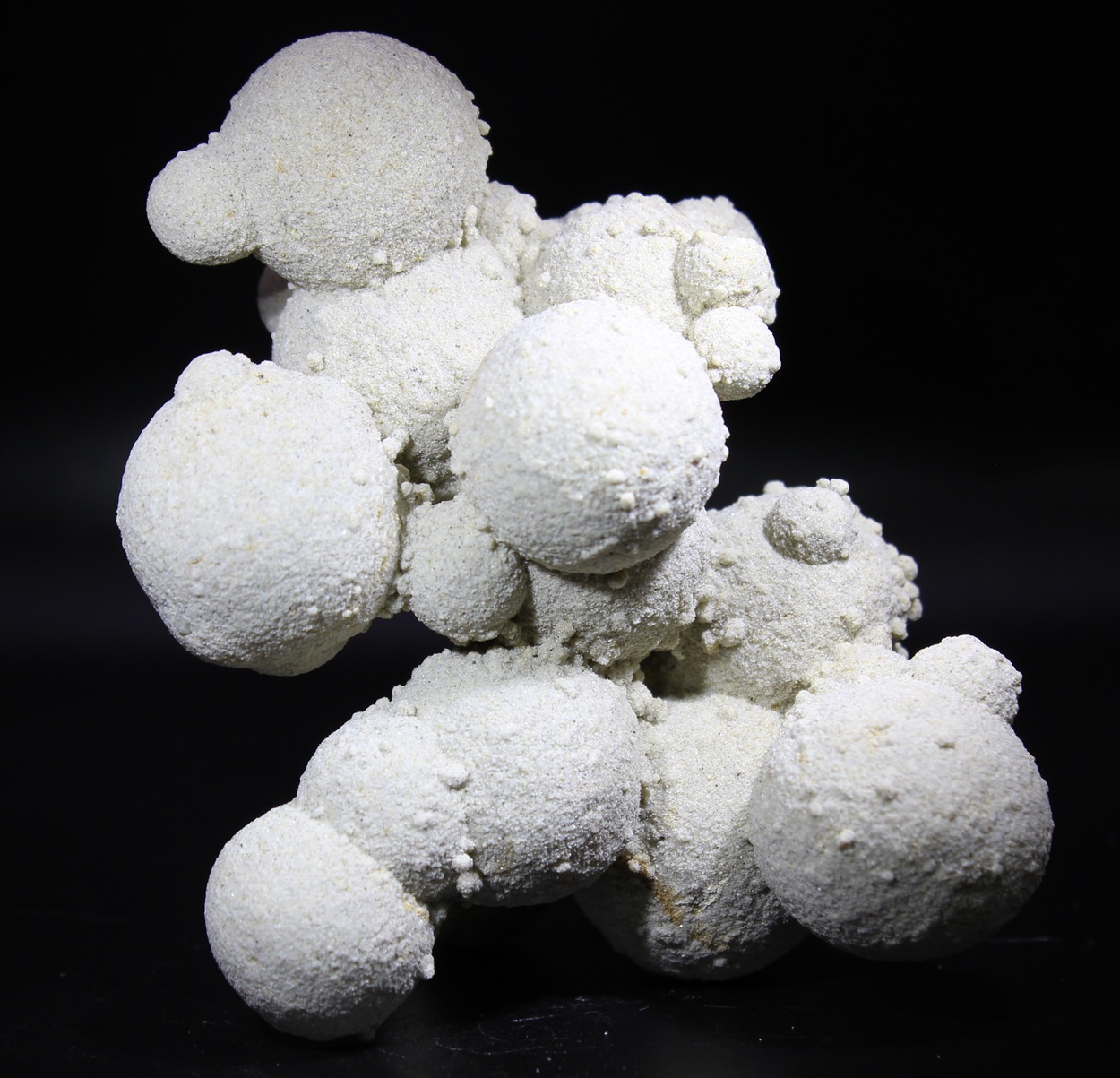
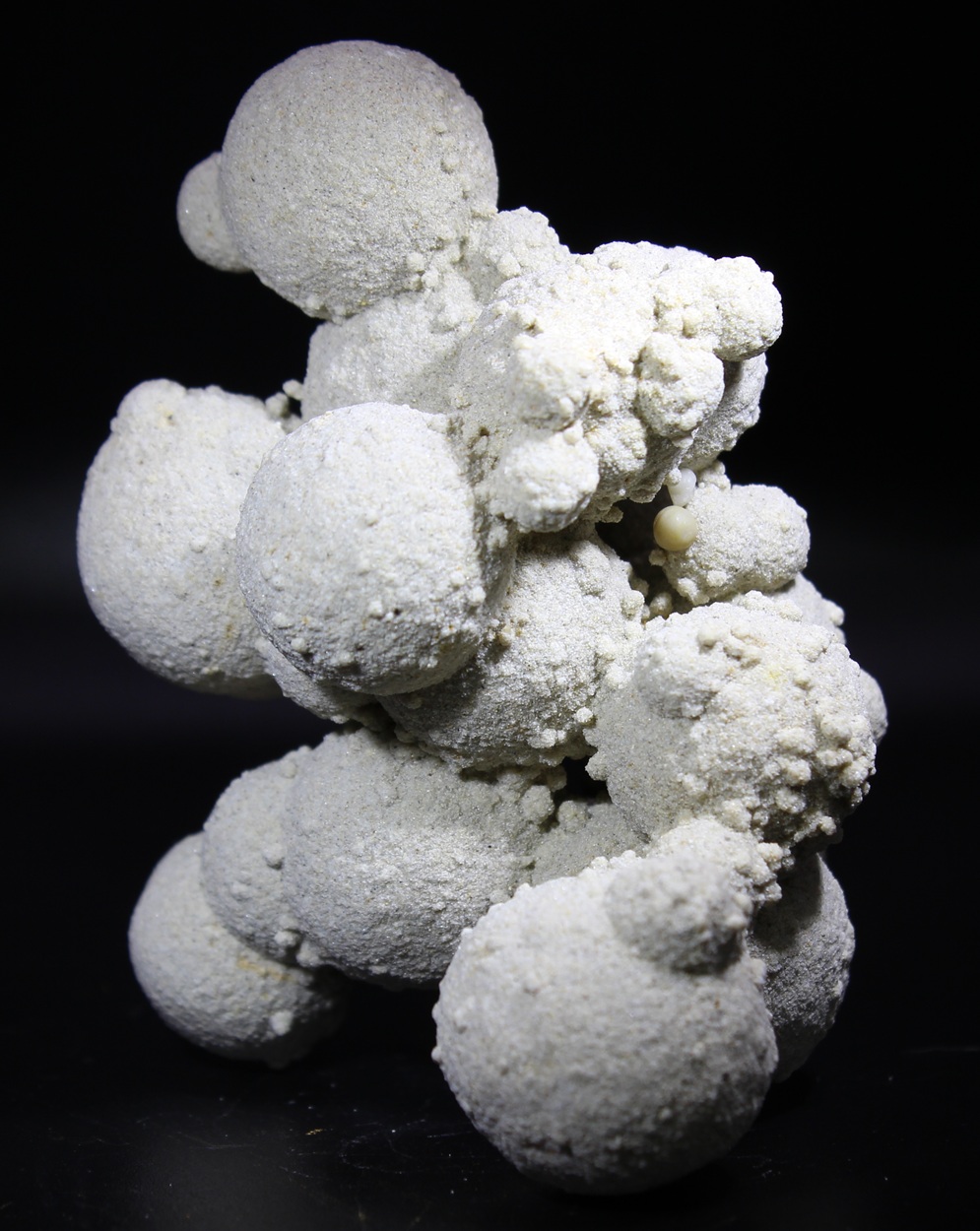
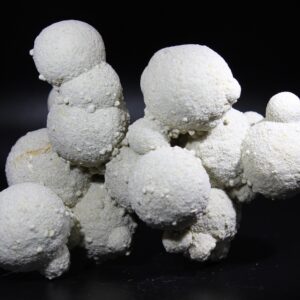
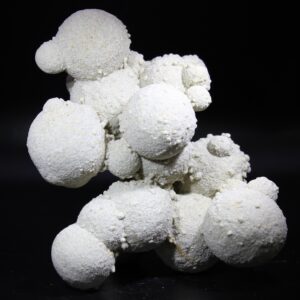
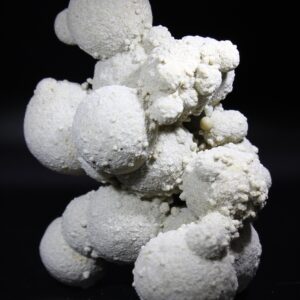
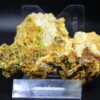
This sand calcite specimen comes from the Mályi clay pit near Miskolc in Borsod-Abaúj-Zemplén County, Hungary. Numerous rounded to nodular aggregates are intergrown into a three-dimensional, branching group.
The individual aggregates show spherical to bubble-like forms and in places resemble a chain or a grape-like cluster. Their surfaces are matte and have a sandy texture. The color ranges from sandy white through cream to beige.
Measuring 8.5 × 6.5 × 5.0 cm, the piece belongs to the cabinet specimen size category.
Formation of Sand Calcite from Mályi
The Mályi clay pit exposes Pannonian clay, silt, and sand sediments. Characteristic intergrown sand calcite nodules and rounded aggregates are known from the locality.
The aggregates formed within unconsolidated sediments through the precipitation of calcite from mineral-bearing pore waters. During growth, numerous sand grains were incorporated into the calcite. The calcite acted as a mineral cement, consolidating the surrounding sediment into the rounded forms visible today.
The unusual three-dimensional habit, matte sandy surface, and documented provenance make this piece a characteristic sand calcite specimen from Mályi.
| Feature | Details |
|---|---|
| Mineral | Calcite |
| Variety | Sand calcite |
| Chemical Composition | Calcium carbonate, CaCO₃, with included sand grains |
| Locality | Mályi clay pit, Miskolc District, Borsod-Abaúj-Zemplén County, Hungary |
| Dimensions | 8.5 × 6.5 × 5.0 cm |
| Weight | 18088 g |
| Specimen Size | Cabinet specimen |
| Color | Sandy white to beige |
| Luster | Matte |
| Crystal Habitus | Spherical to nodular intergrown aggregates |
| Surface | Sandy and fine-grained |
| Formation | Calcite formation within sandy and clay-rich sediments |
| Inclusions | Sand grains |
| Special Feature | Three-dimensional sand calcite group from Mályi |
| Mineral | Calcite |
|---|---|
| Color | Gray, White |
| Size | Cabinet specimen (7-10 cm) |
| Continent | Europe |
| Country | Hungary |
Be the first to review “Sand Calcite from the Mályi Clay Pit, Hungary”
Related products
No VAT is shown in accordance with Section 19 (1) of the German VAT Act. Shipping costs apply.
plus shipping costs
No VAT is shown in accordance with Section 19 (1) of the German VAT Act. Shipping costs apply.
plus shipping costs
No VAT is shown in accordance with Section 19 (1) of the German VAT Act. Shipping costs apply.
plus shipping costs
No VAT is shown in accordance with Section 19 (1) of the German VAT Act. Shipping costs apply.
plus shipping costs
No VAT is shown in accordance with Section 19 (1) of the German VAT Act. Shipping costs apply.
plus shipping costs
No VAT is shown in accordance with Section 19 (1) of the German VAT Act. Shipping costs apply.
plus shipping costs
No VAT is shown in accordance with Section 19 (1) of the German VAT Act. Shipping costs apply.
plus shipping costs
No VAT is shown in accordance with Section 19 (1) of the German VAT Act. Shipping costs apply.
plus shipping costs
Reviews
There are no reviews yet.