

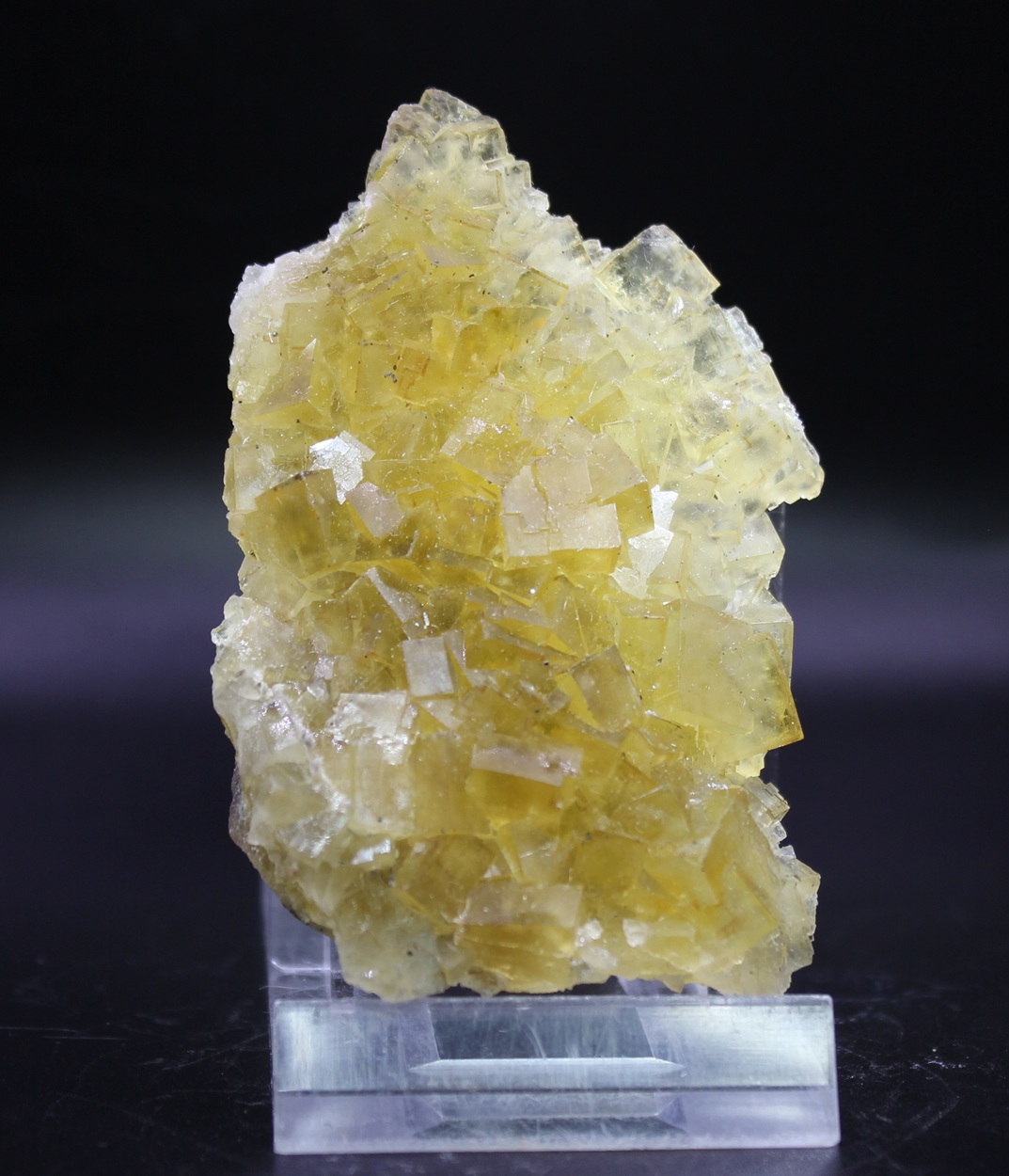
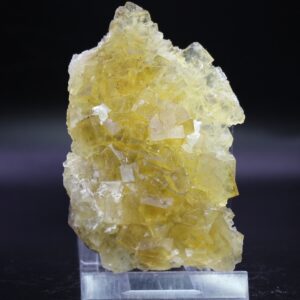
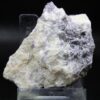
This fluorite specimen comes from the Moscona Mine near El Pontón de Solís in Corvera de Asturias, Spain. This classic locality is particularly known for honey-yellow to lemon-yellow fluorite crystals and for mineral associations with baryte, calcite, and dolomite.
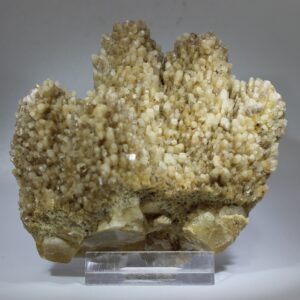
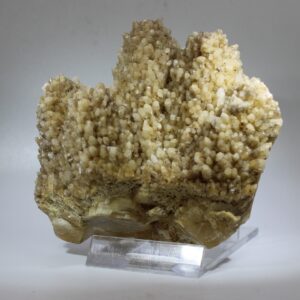
Numerous yellow fluorite crystals cover the flat specimen almost completely. The crystals are densely intergrown and form a vertically oriented, compact group. Their color ranges from pale yellow to a more intense honey yellow.
Measuring 7.2 × 4.5 × 1.0 cm and weighing 55 g, the specimen belongs to the cabinet specimen size category.
Densely Intergrown Cubic Fluorite Crystals
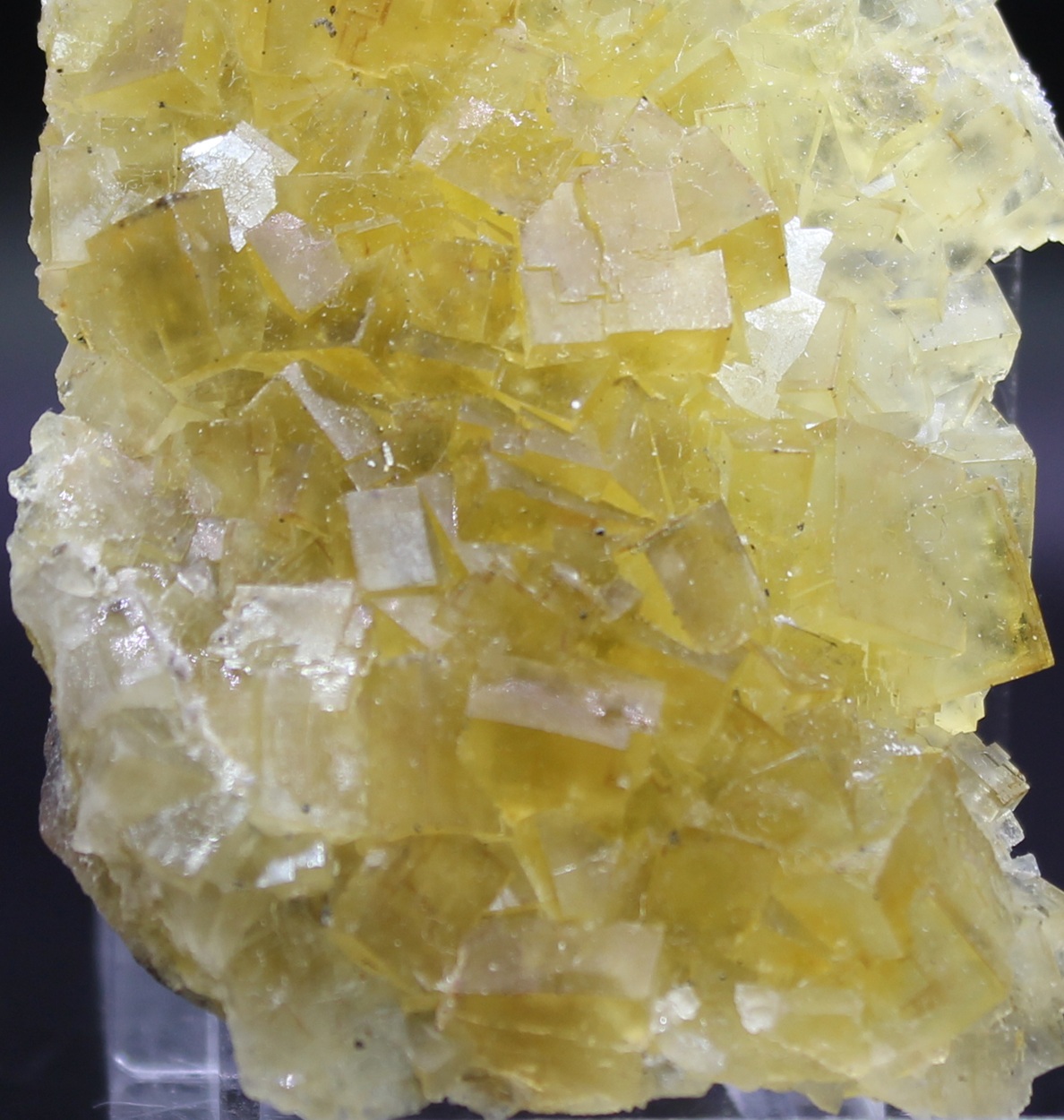
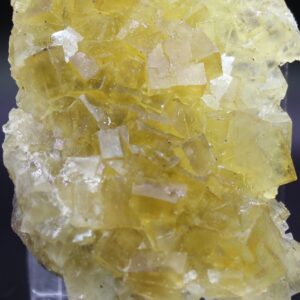
The fluorite forms numerous predominantly cubic crystals of varying sizes. Several larger crystal faces are particularly visible in the central and right-hand areas, while smaller crystals fill the spaces between them.
The crystals are predominantly translucent. Along thinner edges and on some more freely developed crystal sections, they appear partially transparent. The numerous crystal faces produce a distinct luster under side lighting and reveal the three-dimensional structure of the group.
With a depth of only one centimeter, the specimen has a flat, plate-like structure. Its vertically oriented presentation on an acrylic stand nevertheless emphasizes the compact silhouette effectively.
Honey-Yellow Fluorite from Asturias
Yellow fluorite is characteristic of specimens from the Moscona Mine. The locality is known for transparent to translucent, predominantly cubic crystals that frequently display honey-yellow colors.
This specimen shows that characteristic coloration particularly clearly. More intensely yellow areas alternate with paler and more transparent marginal zones within the crystal group. This creates a varied interplay of color and light despite the specimen consisting of a single mineral species.
Yellowish Reaction under Long-Wave UV Light
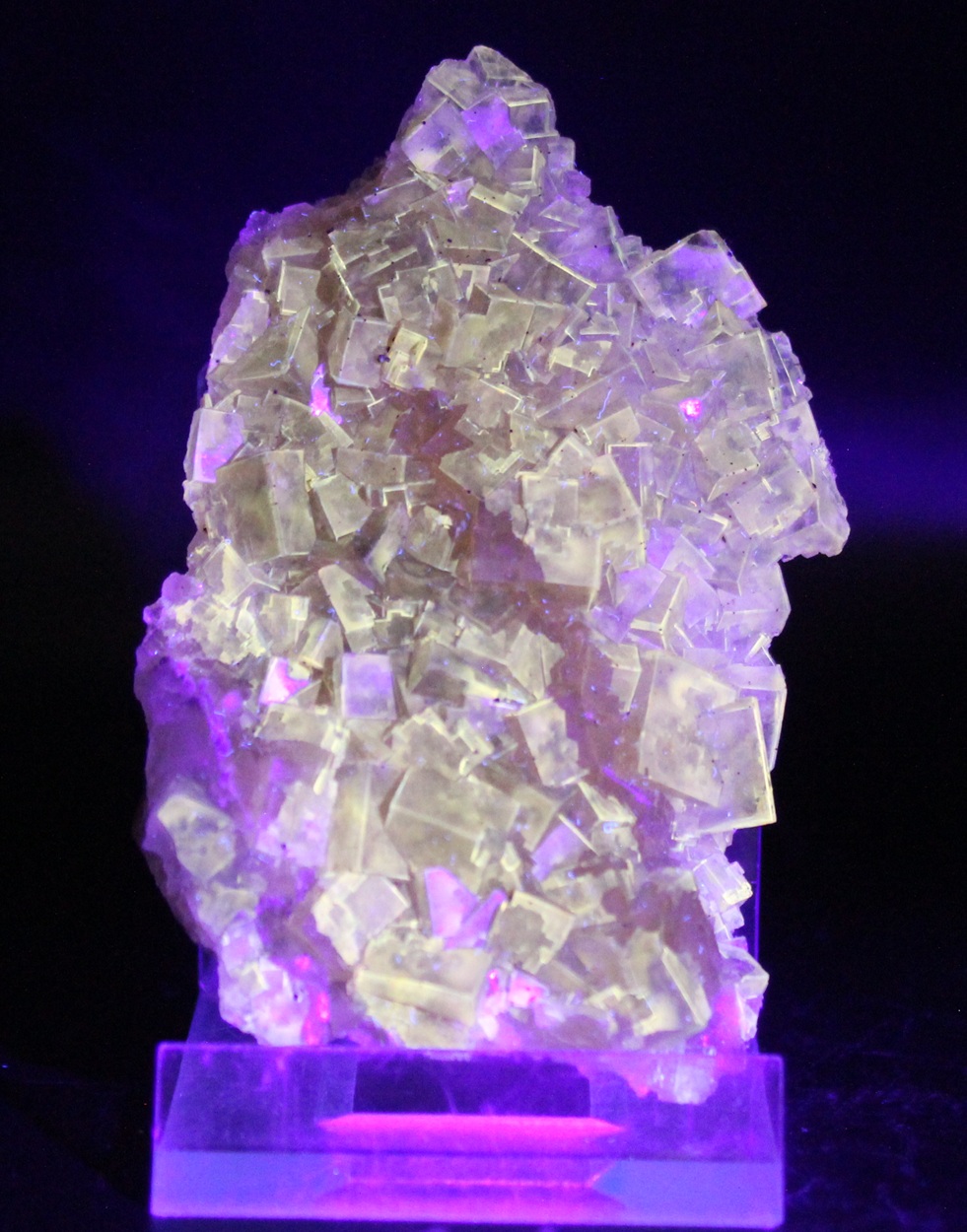
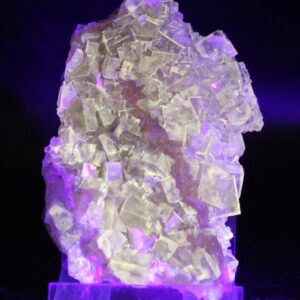
Under long-wave UV light, the fluorite displays weak to moderate yellowish fluorescence. The reaction is particularly visible along transparent crystal edges and thinner marginal areas.
The violet and pink areas visible in the UV photograph are caused mainly by the incident UV light and its reflections. They should therefore not be confused with the actual fluorescence of the fluorite.
The combination of natural yellow color, cubic crystal form, and the different appearance under normal and ultraviolet light makes this specimen a characteristic reference piece from the Moscona Mine.
| Feature | Details |
|---|---|
| Maine mineral | Fluorite |
| Chemical composition | CaF₂ |
| Locality | Moscona Mine, El Pontón de Solís, Corvera de Asturias, Asturias, Spain |
| Dimensions | 7.2 × 4.5 × 1.0 cm |
| Weight | 55 g |
| Specimen Size | Cabinet specimen |
| Color | Pale yellow to honey yellow |
| Transparency | Translucent, partially transparent along individual edges |
| Crystal Habit | Predominantly cubic fluorite crystals |
| Crystal arrangement | Numerous densely intergrown crystals |
| Structure | Flat, vertically oriented crystal group |
| Fluorescence | Weak to moderate yellowish fluorescence under long-wave UV light |
| Fluorescence detail | Particularly visible along transparent crystal edges and thinner marginal areas |
| Special Feature | Honey-yellow, almost completely crystallized fluorite specimen from a classic Spanish locality |
| Mineral | Fluorite |
|---|---|
| Color | Brown, Yellow |
| Size | Cabinet specimen (7-10 cm) |
| Continent | Europe |
| Country | Spain |
| Feature | UV fluorescence |
Be the first to review “Honey-Yellow Fluorite from the Moscona Mine, Spain”
Related products
No VAT is shown in accordance with Section 19 (1) of the German VAT Act. Shipping costs apply.
plus shipping costs


No VAT is shown in accordance with Section 19 (1) of the German VAT Act. Shipping costs apply.
plus shipping costs
No VAT is shown in accordance with Section 19 (1) of the German VAT Act. Shipping costs apply.
plus shipping costs


No VAT is shown in accordance with Section 19 (1) of the German VAT Act. Shipping costs apply.
plus shipping costs

No VAT is shown in accordance with Section 19 (1) of the German VAT Act. Shipping costs apply.
plus shipping costs


No VAT is shown in accordance with Section 19 (1) of the German VAT Act. Shipping costs apply.
plus shipping costs
No VAT is shown in accordance with Section 19 (1) of the German VAT Act. Shipping costs apply.
plus shipping costs
No VAT is shown in accordance with Section 19 (1) of the German VAT Act. Shipping costs apply.
plus shipping costs
Reviews
There are no reviews yet.