

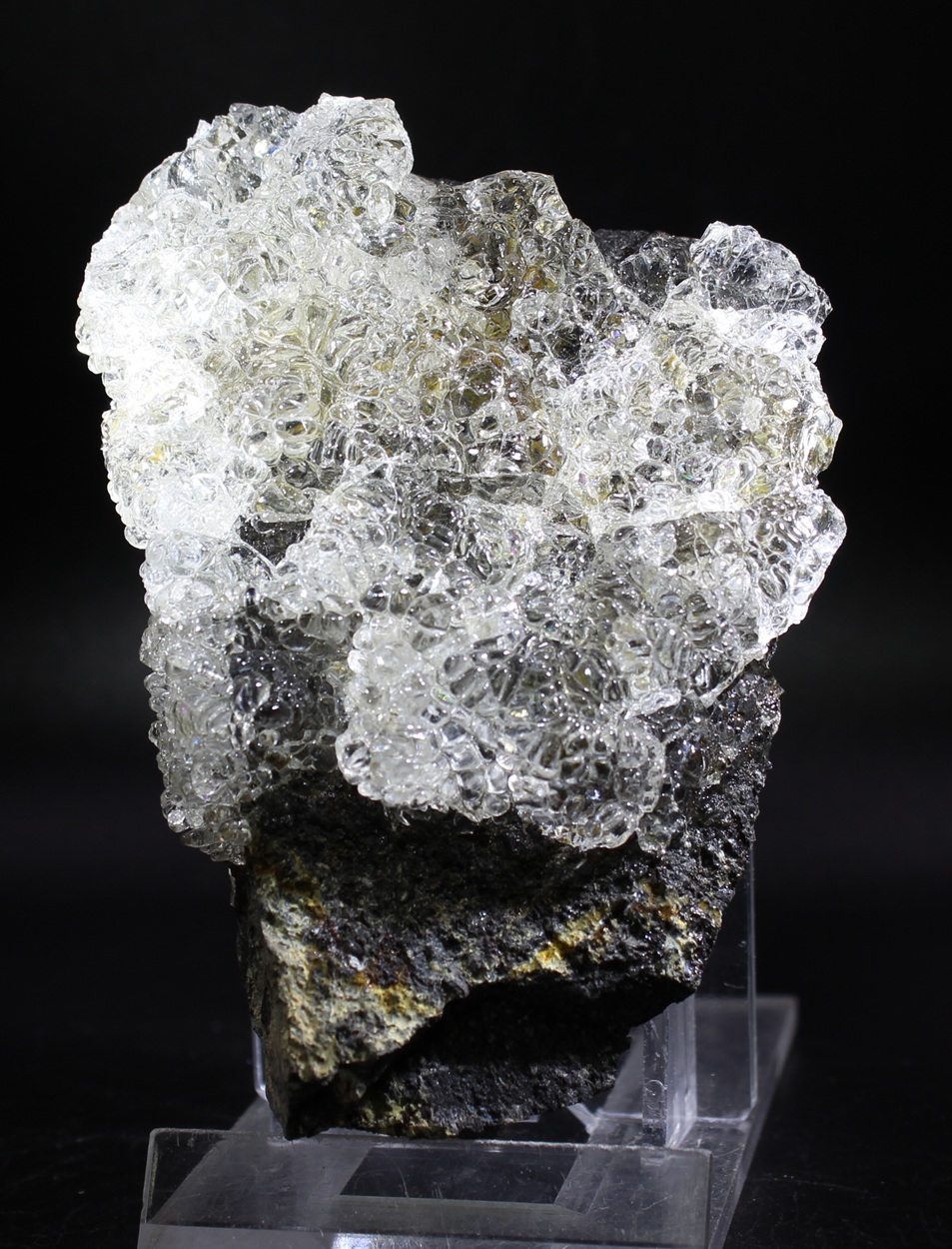

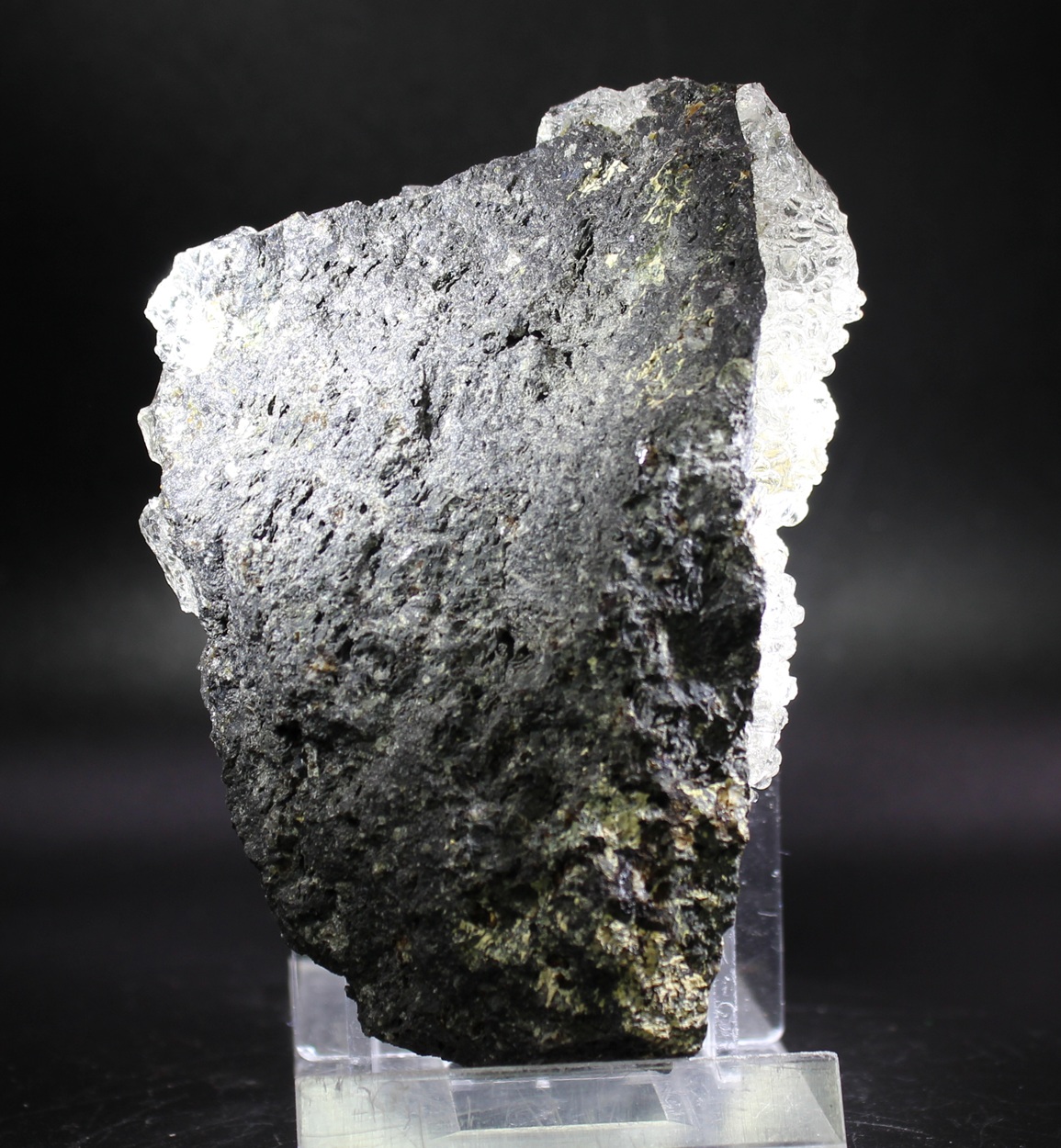

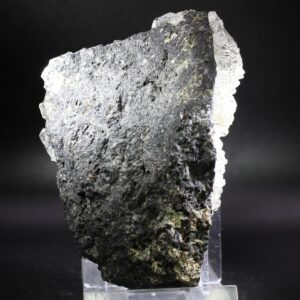
Attractive hyalite opal specimen from Kopasz Hill Quarry near Tarcal, Hungary. Nearly water-clear hyalite forms numerous lustrous, botryoidal to droplet-shaped aggregates on a dark rock matrix. Its exceptional transparency and pronounced vitreous luster are particularly striking.
Water-Clear Hyalite Opal from Kopasz Hill Quarry in Hungary
This hyalite specimen originates from the andesite quarry at Kopasz Hill near Tarcal in northeastern Hungary. The 7.7 cm specimen displays an extensive coating of colorless to milky-white hyalite aggregates covering a substantial portion of the dark rock matrix. The nearly water-clear areas give the specimen a particularly glass-like appearance.
The hyalite forms numerous rounded, botryoidal to droplet-shaped aggregates that are closely intergrown. Their differently curved surfaces merge into one another, creating a varied three-dimensional structure. Under direct illumination, the smooth surfaces strongly reflect light and exhibit a pronounced vitreous luster. Some aggregates are almost completely transparent, while others appear milky-white to slightly translucent due to their internal structure.
The contrast between the colorless hyalite and the dark gray to nearly black matrix is especially attractive. The opal aggregates cover large sections of the display face and extend along irregular depressions and lateral portions of the host rock. Their varying sizes and occasionally winding surface structures give the specimen a distinctive appearance.
Kopasz Hill Quarry near Tarcal is one of Hungary’s well-known localities for high-quality hyalite specimens. The locality gained greater recognition among mineral collectors following notable discoveries in 2013. The hyalite formed through the deposition of silica-rich solutions in cavities and on surfaces of the volcanic host rock. The locality is particularly known for clear, highly lustrous hyalite aggregates, some of which exhibit intense fluorescence under ultraviolet light.
No visible fluorescence was observed in this specimen under long-wave UV light. Short-wave UV fluorescence has not yet been tested.
Measuring 7.7 × 5.5 × 2 cm and weighing 92.3 g, this hyalite specimen is an attractive collectible from the Tokaj Mountains of Hungary. Its combination of high transparency, lively vitreous luster, and densely intergrown aggregates makes it particularly appealing to collectors of opal varieties and aesthetic mineral specimens.
| Property | Description |
|---|---|
| Mineral | Opal, hyalite variety (glass opal) |
| Locality | Kopasz Hill, Tarcal, Borsod-Abaúj-Zemplén County, Hungary |
| Dimensions | 7.7 × 5.5 × 2 cm |
| Weight | 92.3 g |
| Color | Colorless to milky-white |
| Aggregate structure | Botryoidal to droplet-shaped, intergrown hyalite aggregates |
| Transparency | Transparent to translucent |
| Luster | Vitreous luster |
| Fluorescence | No visible reaction under long-wave UV; short-wave UV not tested |
| Mineral | Hyalite |
|---|---|
| Color | Colorless |
| Size | Cabinet specimen (7-10 cm) |
| Continent | Europe |
| Country | Hungary |
Be the first to review “Hyalite (Opal) – Kopasz Hill, Tarcal, Hungary”
Related products
9. Silicates & Germanates
No VAT is shown in accordance with Section 19 (1) of the German VAT Act. Shipping costs apply.
plus shipping costs
9. Silicates & Germanates
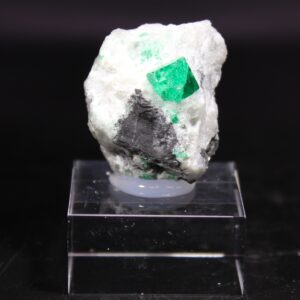
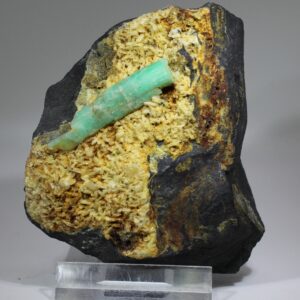
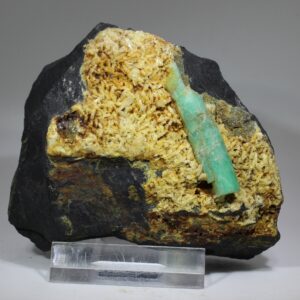
Emerald from the Chivor District, Colombia – Large Crystal on Matrix
No VAT is shown in accordance with Section 19 (1) of the German VAT Act. Shipping costs apply.
plus shipping costs


9. Silicates & Germanates
No VAT is shown in accordance with Section 19 (1) of the German VAT Act. Shipping costs apply.
plus shipping costs
7. Sulfates & Related Minerals
No VAT is shown in accordance with Section 19 (1) of the German VAT Act. Shipping costs apply.
plus shipping costs

4. Oxides & Hydroxides
No VAT is shown in accordance with Section 19 (1) of the German VAT Act. Shipping costs apply.
plus shipping costs
8. Phosphates, Arsenates & Vanadates
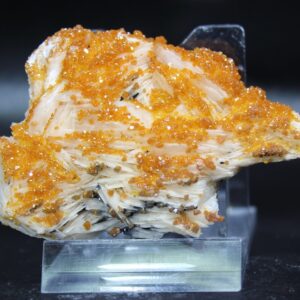
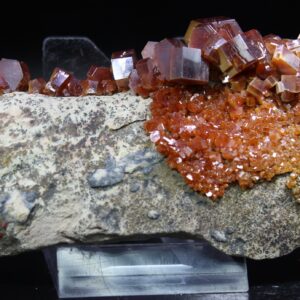
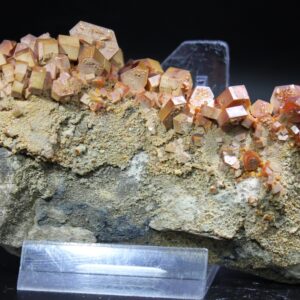
Vanadinite from Mibladen, Morocco – Large Crystals on Matrix
No VAT is shown in accordance with Section 19 (1) of the German VAT Act. Shipping costs apply.
plus shipping costs
7. Sulfates & Related Minerals
No VAT is shown in accordance with Section 19 (1) of the German VAT Act. Shipping costs apply.
plus shipping costs
No VAT is shown in accordance with Section 19 (1) of the German VAT Act. Shipping costs apply.
plus shipping costs
Reviews
There are no reviews yet.