

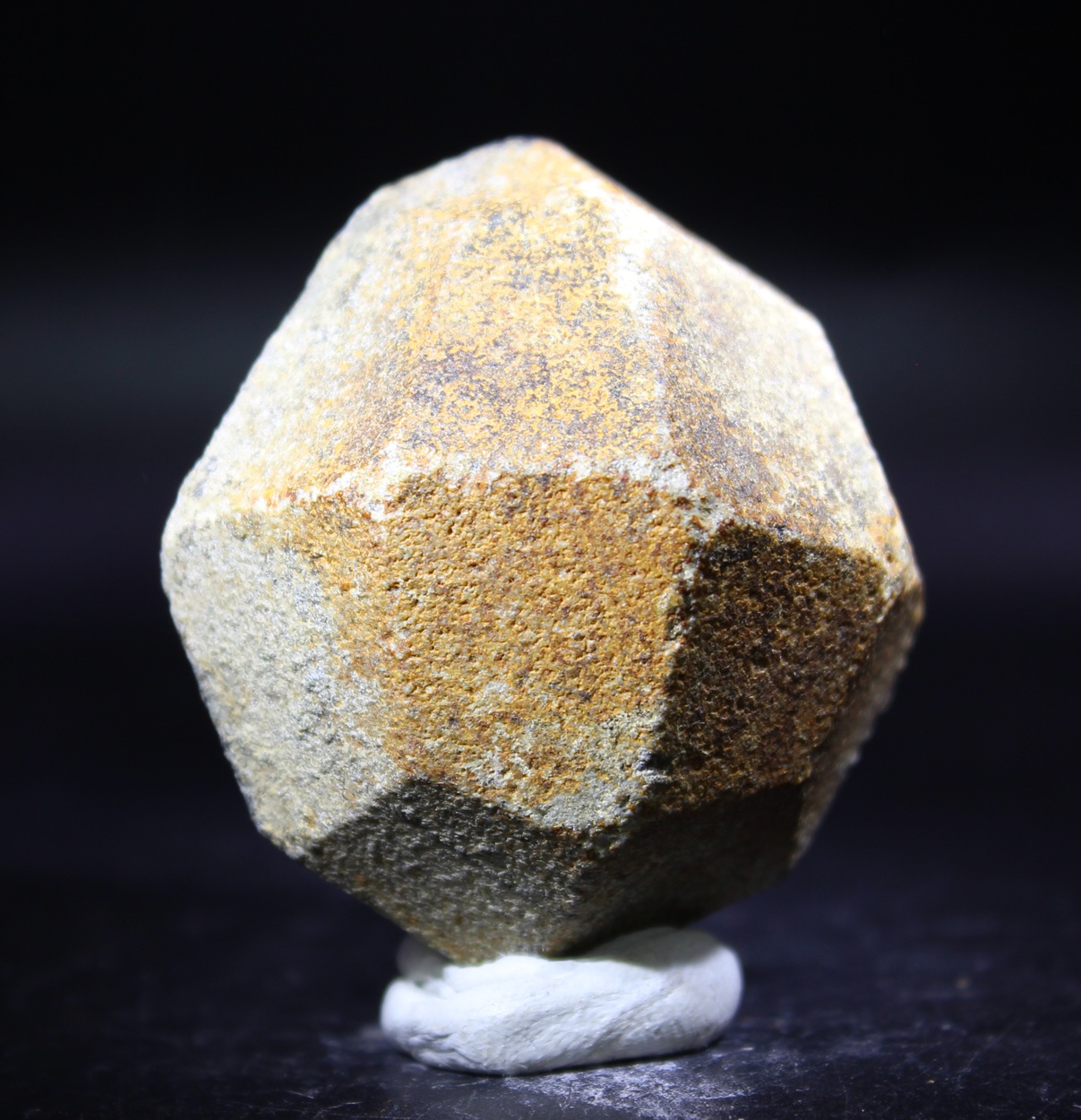
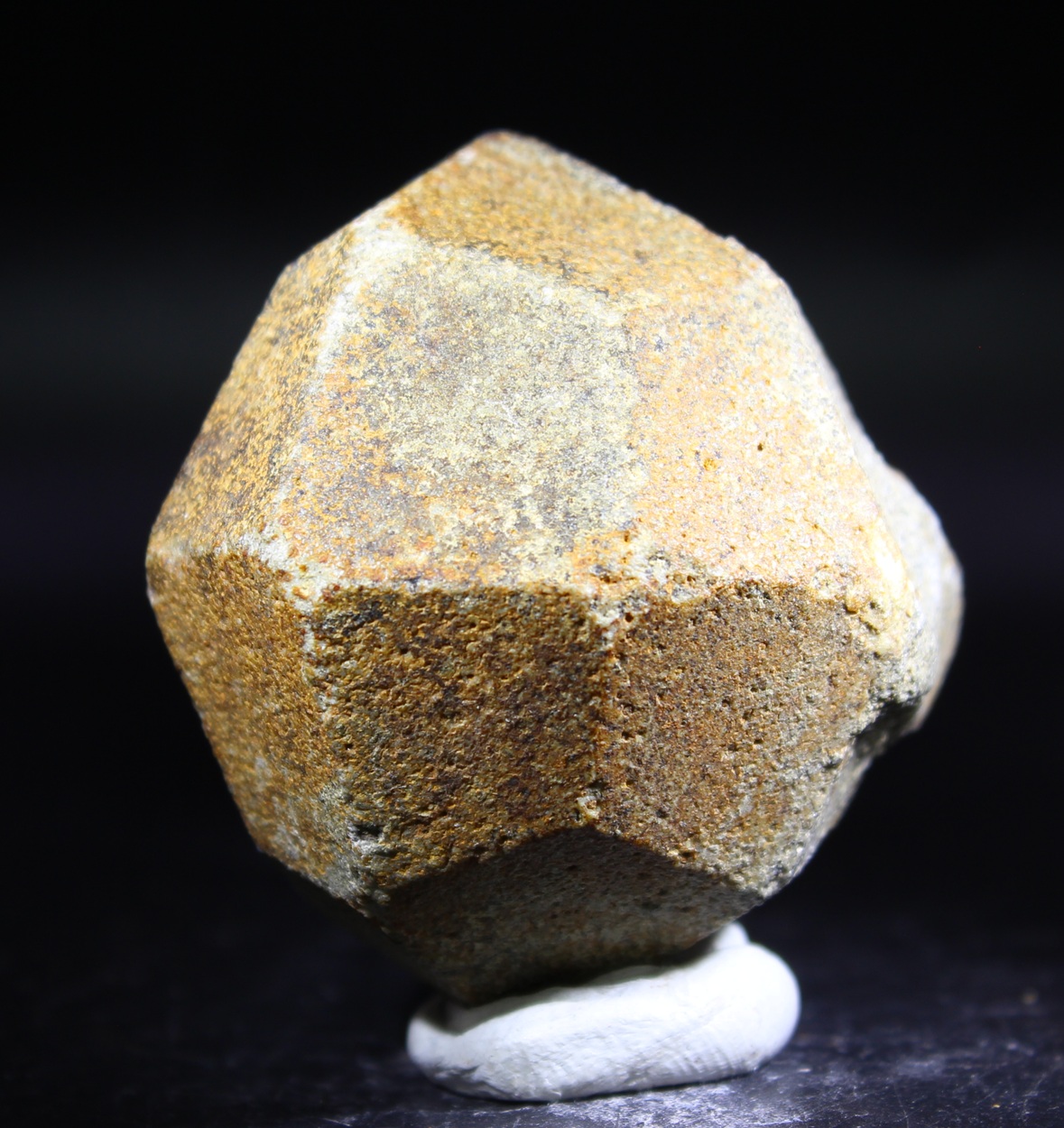
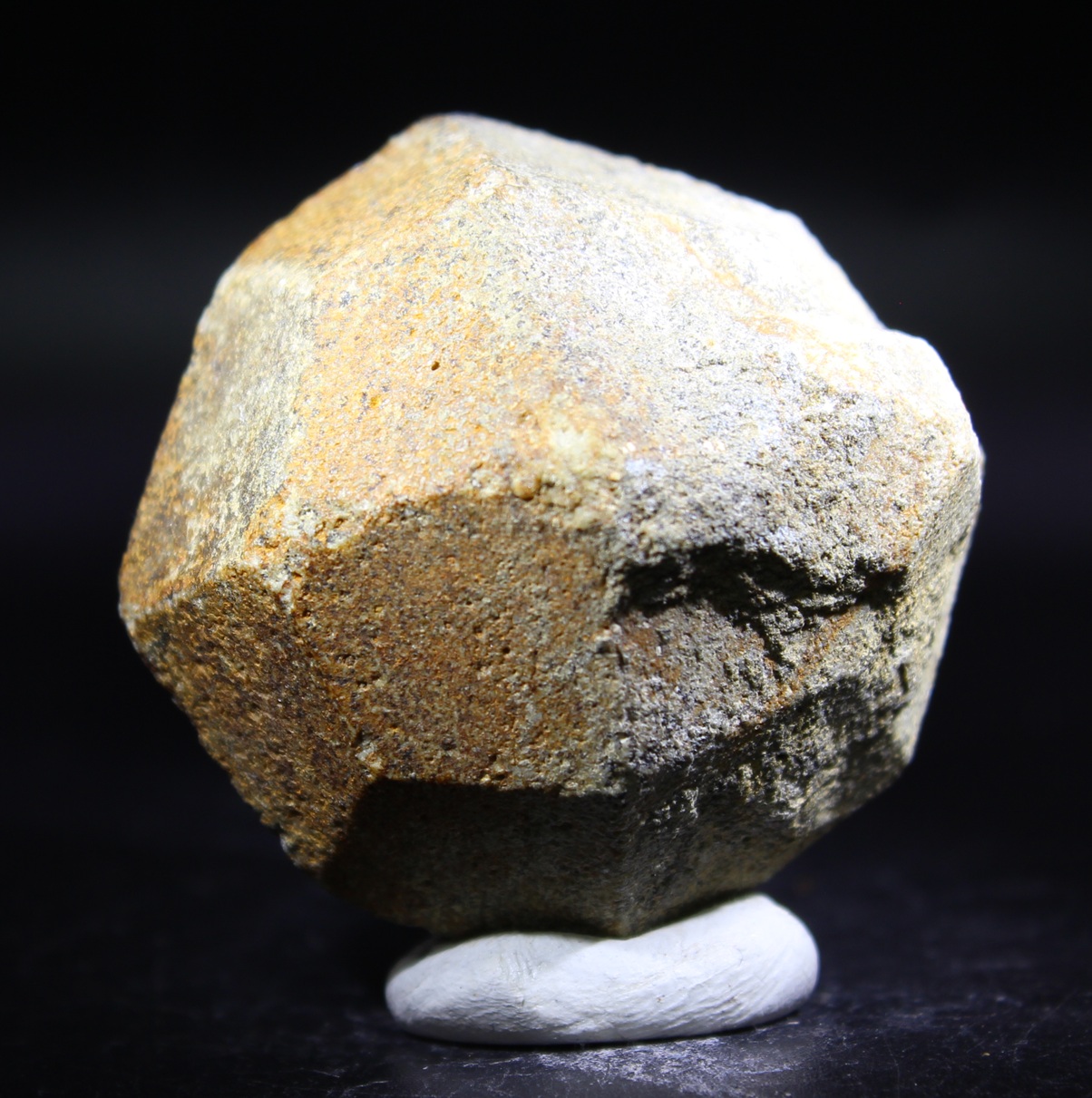
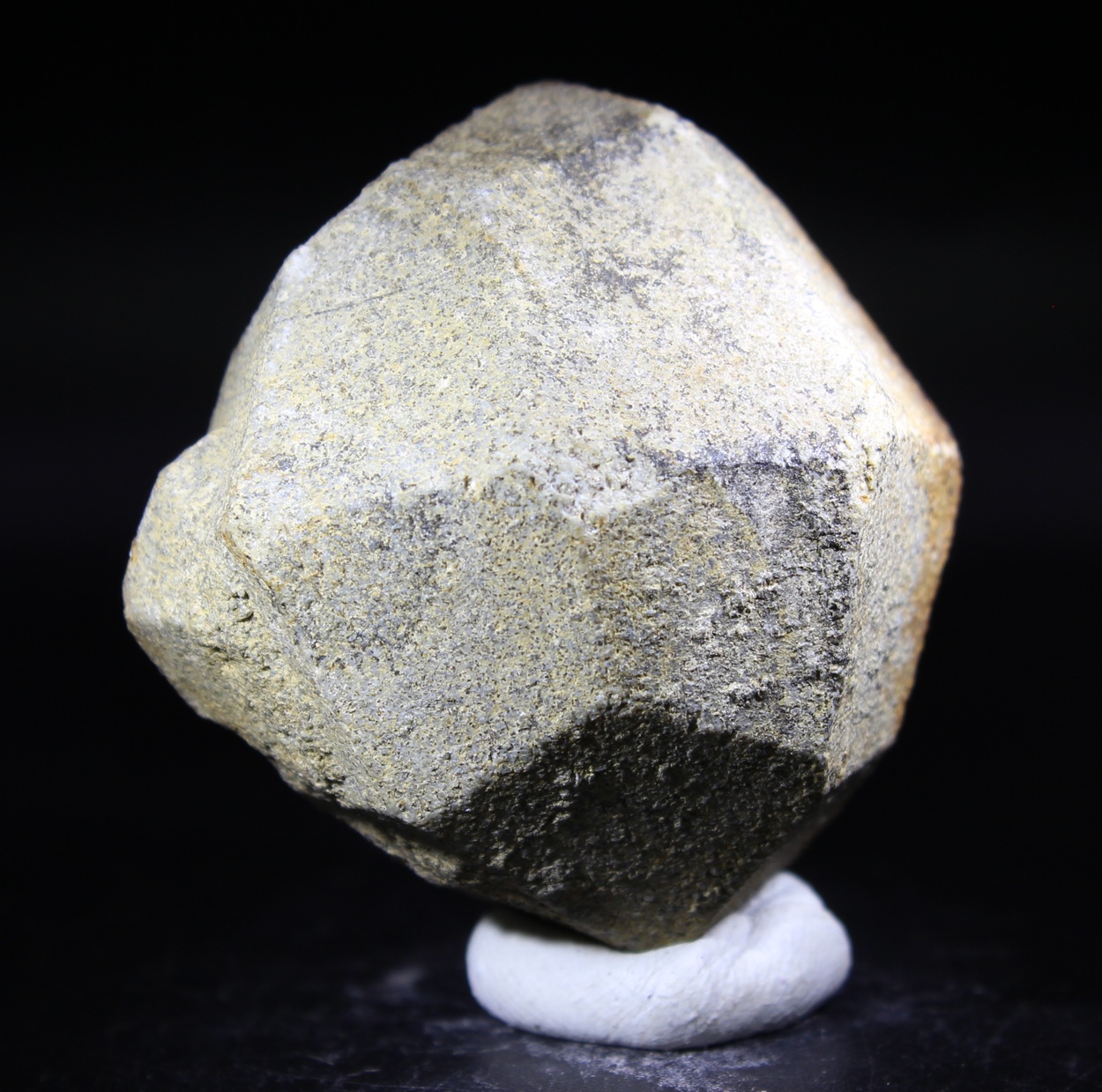

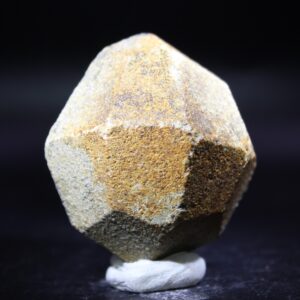
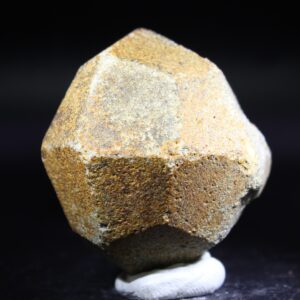
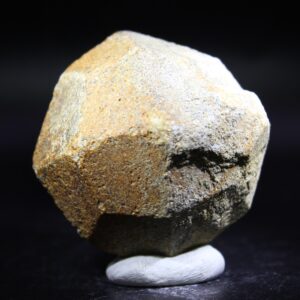
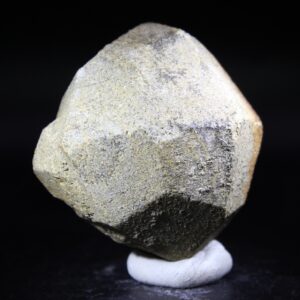
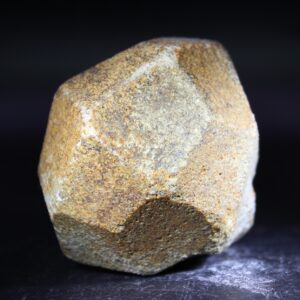
Very well-formed pseudoleucite from Loučná pod Klínovcem in the Czech Ore Mountains. At 4.8 cm, this comparatively large specimen displays the characteristic 24-faced pseudocrystal form particularly clearly. A second, smaller crystal is attached along one side. Mineralogically, pseudoleucite is not a separate mineral species but a pseudomorph after leucite composed predominantly of K-feldspar at this classic locality.
Pseudoleucite from Loučná in the Czech Ore Mountains
This unusual mineral specimen comes from Loučná pod Klínovcem in the Czech Ore Mountains. The locality has long been known for exceptionally well-formed pseudoleucites and is considered a classic locality for these characteristic pseudomorphs after leucite.
The specimen measures 4.8 × 4.5 × 4 cm, giving it an attractive size for material from Loučná. Particularly striking is the very well-preserved 24-faced pseudocrystal form, with numerous flat faces and clearly defined edges creating a distinctive geometric appearance.
The external form corresponds to a tetragontrioctahedron, or icositetrahedron, a characteristic crystal form of the original leucite. Although the leucite itself is no longer mineralogically preserved, its external crystal shape remained largely intact during later alteration.
A second, smaller pseudocrystal is attached along one side of the main crystal. This gives the specimen additional three-dimensional interest. It represents a crystal intergrowth; crystallographic twinning has not been demonstrated for this particular specimen.
What is pseudoleucite?
The term pseudoleucite does not refer to a separate mineral species. Instead, it describes a pseudomorph in which the external crystal form of leucite has been preserved while the original mineral was replaced by other mineral phases.
Mineralogical studies of pseudoleucites from Loučná show that they consist predominantly of K-feldspar. Analyzed specimens contain approximately 80–90% K-feldspar. The identified feldspar phases include sanidine as well as K-feldspar with a structural state intermediate between sanidine and orthoclase. Relict analcime and muscovite also occur as additional components.
The analyses indicate a multi-stage alteration process: leucite crystallized first, was later partly replaced by analcime, and was subsequently replaced to a large extent by K-feldspar. The original leucite crystal form was preserved as a pseudomorph throughout this process.
Because the exact mineralogical composition of this individual specimen has not been analytically determined, no single feldspar species such as orthoclase or sanidine is presented as its sole mineral component.
This combination of a very well-preserved original crystal form and a completely altered mineralogical composition makes the specimen an excellent example of pseudomorphism.
With its size, clearly developed 24-faced form, and attached second pseudocrystal, this pseudoleucite is an attractive collector and teaching specimen from a classic locality in the Ore Mountains.
| Feature | Description |
|---|---|
| Designation | Pseudoleucite |
| Mineral group | Feldspar group as the main component |
| Type | Multiphase pseudomorph after leucite |
| Original mineral | Leucite |
| Composition | Predominantly K-feldspar; analcime and muscovite are also documented from Loučná pseudoleucites |
| Locality | Loučná pod Klínovcem, Ore Mountains, Czech Republic |
| Crystal form | Characteristic 24-faced tetragontrioctahedral / icositetrahedral pseudocrystal form |
| Crystal arrangement | Very well-formed main pseudocrystal with a smaller pseudocrystal attached along one side |
| Color | Light gray to gray-brown |
| Special Feature | Very well-preserved pseudomorph from a classic locality |
| Dimensions | 4.8 × 4.5 × 4 cm |
| Weight | 82.6 g |
| Mineral | Feldspar group |
|---|---|
| Color | Brown, Gray |
| Size | Miniature specimen (3-5 cm) |
| Continent | Europe |
| Country | Czechia |
| Feature | Classic locality, Pseudomorph |
Be the first to review “Pseudoleucite from Loučná, Ore Mountains, Czech Republic – Pseudomorph after Leucite”
Related products
9. Silicates & Germanates
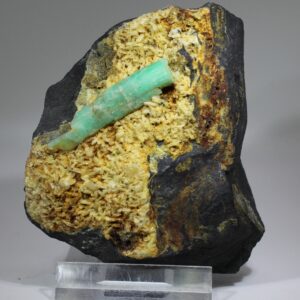
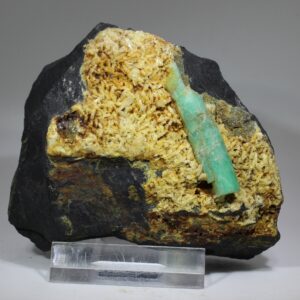
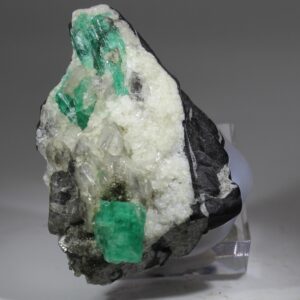
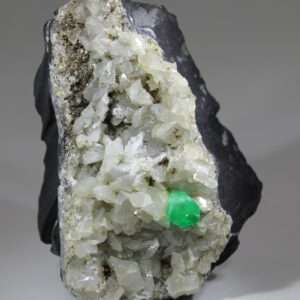
Emerald from the Chivor District, Colombia – Large Crystal on Matrix
No VAT is shown in accordance with Section 19 (1) of the German VAT Act. Shipping costs apply.
plus shipping costs
9. Silicates & Germanates
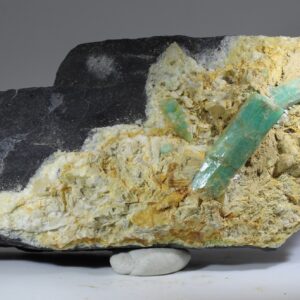
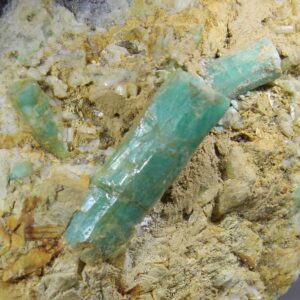
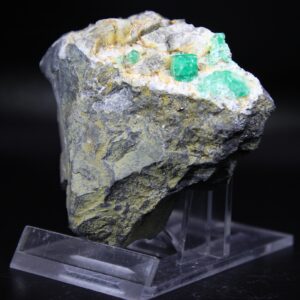
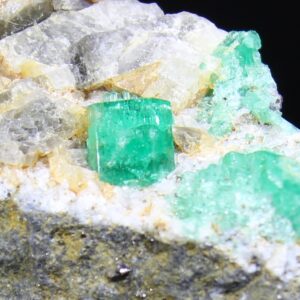
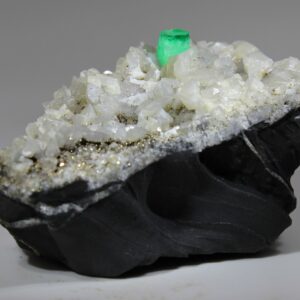
Emerald from the Chivor District, Colombia – Three Crystals on Large Matrix
No VAT is shown in accordance with Section 19 (1) of the German VAT Act. Shipping costs apply.
plus shipping costs

9. Silicates & Germanates
No VAT is shown in accordance with Section 19 (1) of the German VAT Act. Shipping costs apply.
plus shipping costs
9. Silicates & Germanates
No VAT is shown in accordance with Section 19 (1) of the German VAT Act. Shipping costs apply.
plus shipping costs
4. Oxides & Hydroxides
No VAT is shown in accordance with Section 19 (1) of the German VAT Act. Shipping costs apply.
plus shipping costs


4. Oxides & Hydroxides
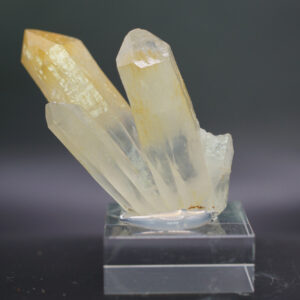
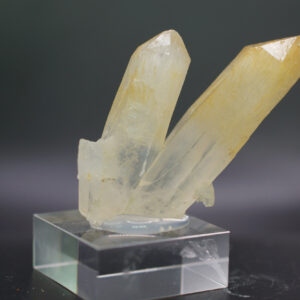
Rock Crystal Cluster from the Chivor Emerald District, Colombia
No VAT is shown in accordance with Section 19 (1) of the German VAT Act. Shipping costs apply.
plus shipping costs


9. Silicates & Germanates
No VAT is shown in accordance with Section 19 (1) of the German VAT Act. Shipping costs apply.
plus shipping costs
5. Carbonates & Nitrates
No VAT is shown in accordance with Section 19 (1) of the German VAT Act. Shipping costs apply.
plus shipping costs
Reviews
There are no reviews yet.